
Sholay
This article explores the central theme of the blockbuster classic film of Hindi cinema, Sholay, which released in 1975. Much has been written about the film (book, undergraduate theses, journal paper, and countless articles and videos).
Sholay has been featured in multiple posts on Chhaayaageet going behind the scenes of the making of the music and songs. This article presents an analysis of the central theme of the film.
The film, directed by Ramesh Sippy and written by Salim-Javed, is a revenge drama and action film. The protagonist Thakur (Sanjeev Kumar), with the help of two small-time crooks, Jai (Amitabh Bachchan) and Veeru (Dharmendra), plots revenge against the dacoit Gabbar Singh (Amjad Khan) for killing Thakur’s family and terrorizing the villagers of Ramgarh.
However, this is the plot and storyline of the film.
The central theme of the film is:
People deserve a second chance.
This central theme keeps recurring throughout the film juxtaposing the rigid system and society who have given up on certain classes of people and marginalized them vis-a-vis those who advocate for second chances. This is the central conflict. Let us see how this is depicted.
1. Opening scene between Jailer and Thakur
The Jailer has been summoned by Thakur as he is looking for two men for an assignment. Upon seeing the photos of Veeru and Jai, the Jailer remarks that they are crooks. He doesn’t know what assignment Thakur has in mind for them, but he knows for sure that they are good for nothing.
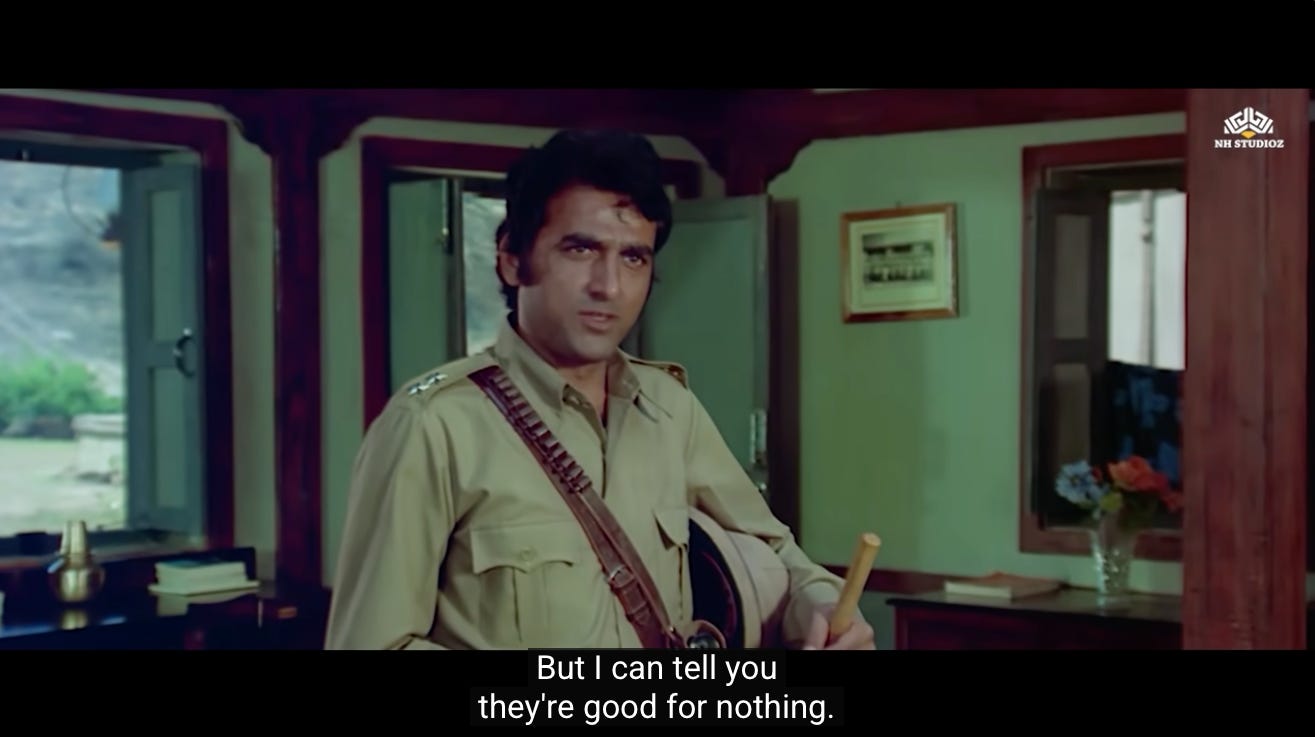
Thakur advocates for Jai and Veeru, saying that if on one hand they have some vices, they have some virtues, too.
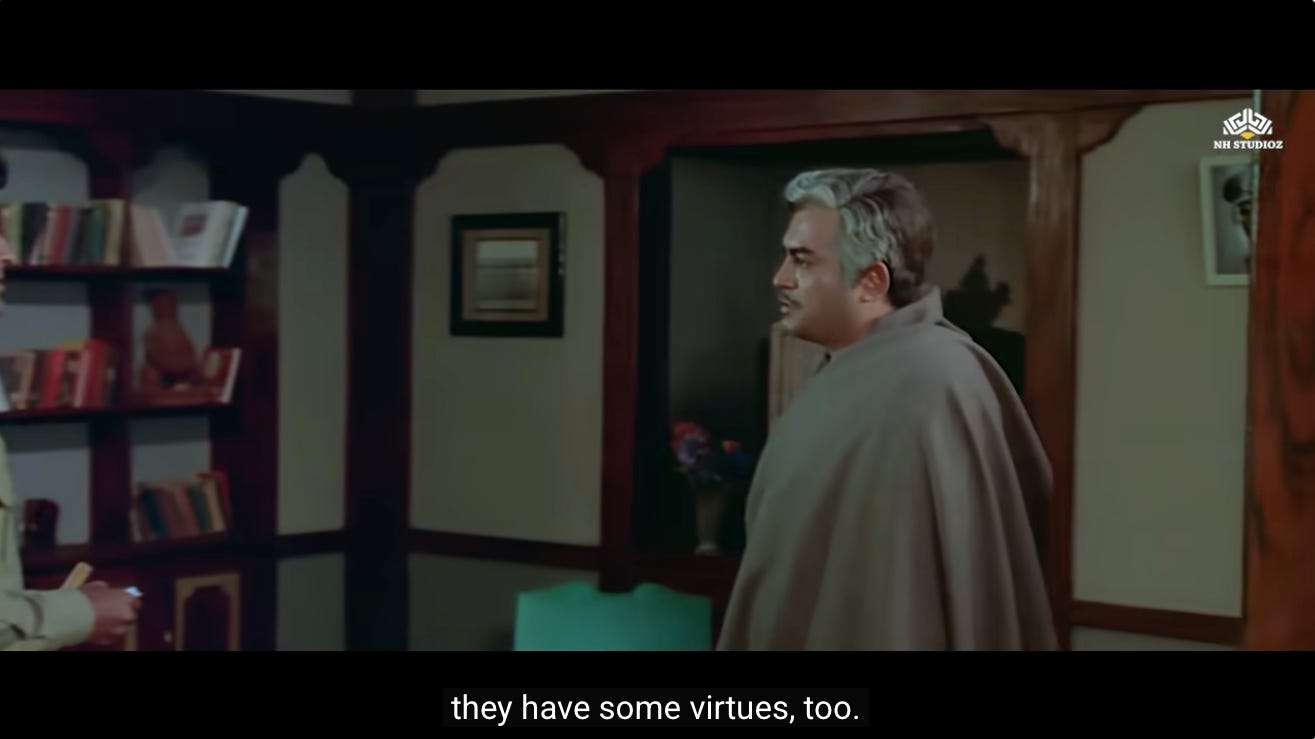
The Jailer doesn’t buy it. He represents the rigid system that condemns those being judged bad to have no chance of coming good.
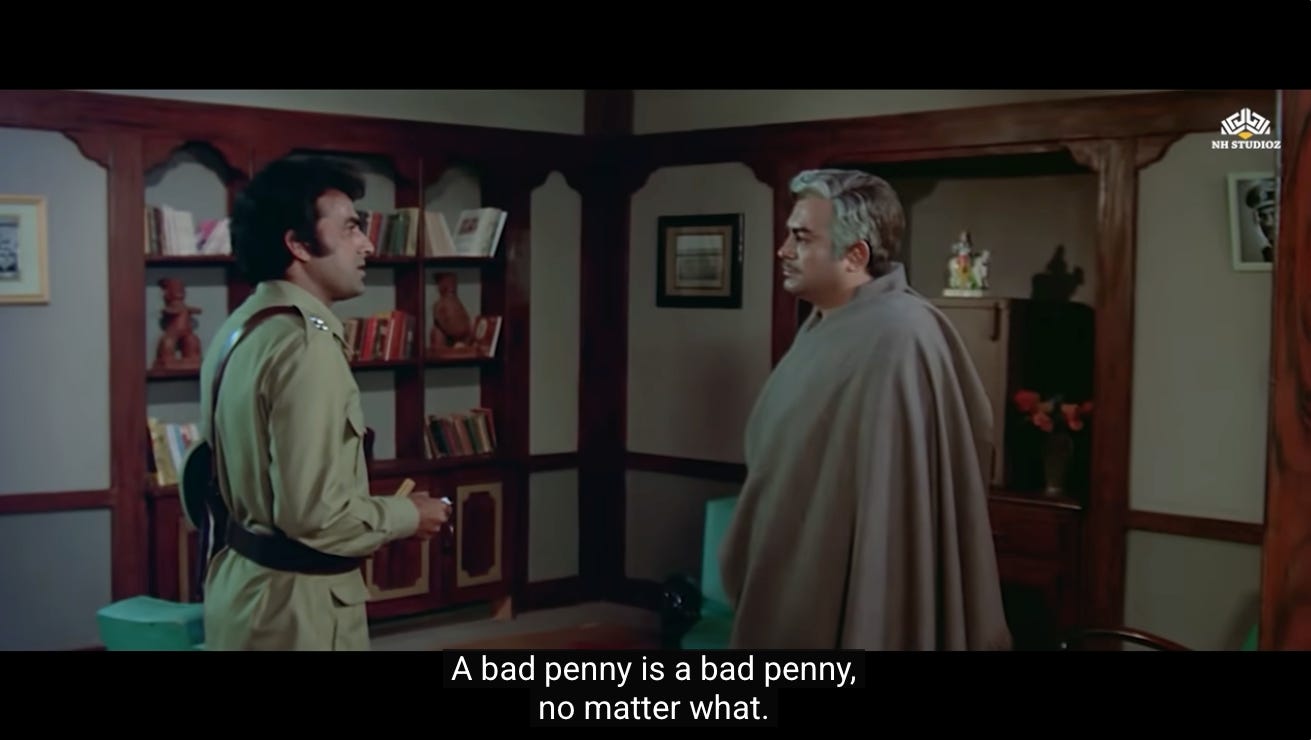
Thakur recounts a past incident where his life was saved by Jai and Veeru’s humanity, further adding:
“They’re bad but there is a good side to them as well.”
In this opening scene between the Jailer and Thakur, the Jailer represents the system that has given up on Jai and Veeru as criminals beyond repair. Thakur represents the benevolent side of us, imploring us to see the good side of everyone, even crooks.
The opening scene establishes the central theme and conflict of the movie right away. This is what we are going to watch in the next 3 hours.
2. British-era Jailer
In this scene, Jai and Veeru have been caught by the police and put in jail. The jailer-in-charge (Asrani) touts himself as a British-era jailer, who is not like today’s jailers who waste time trying to reform prisoners.
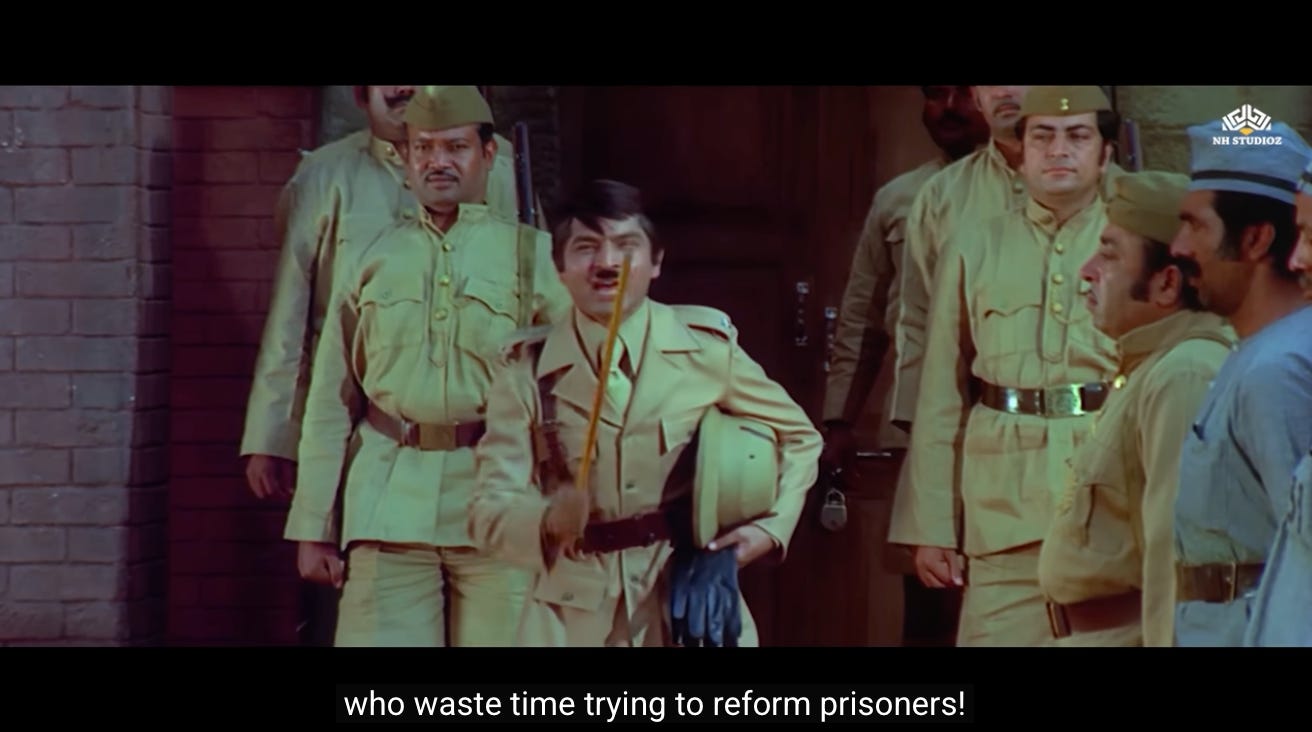
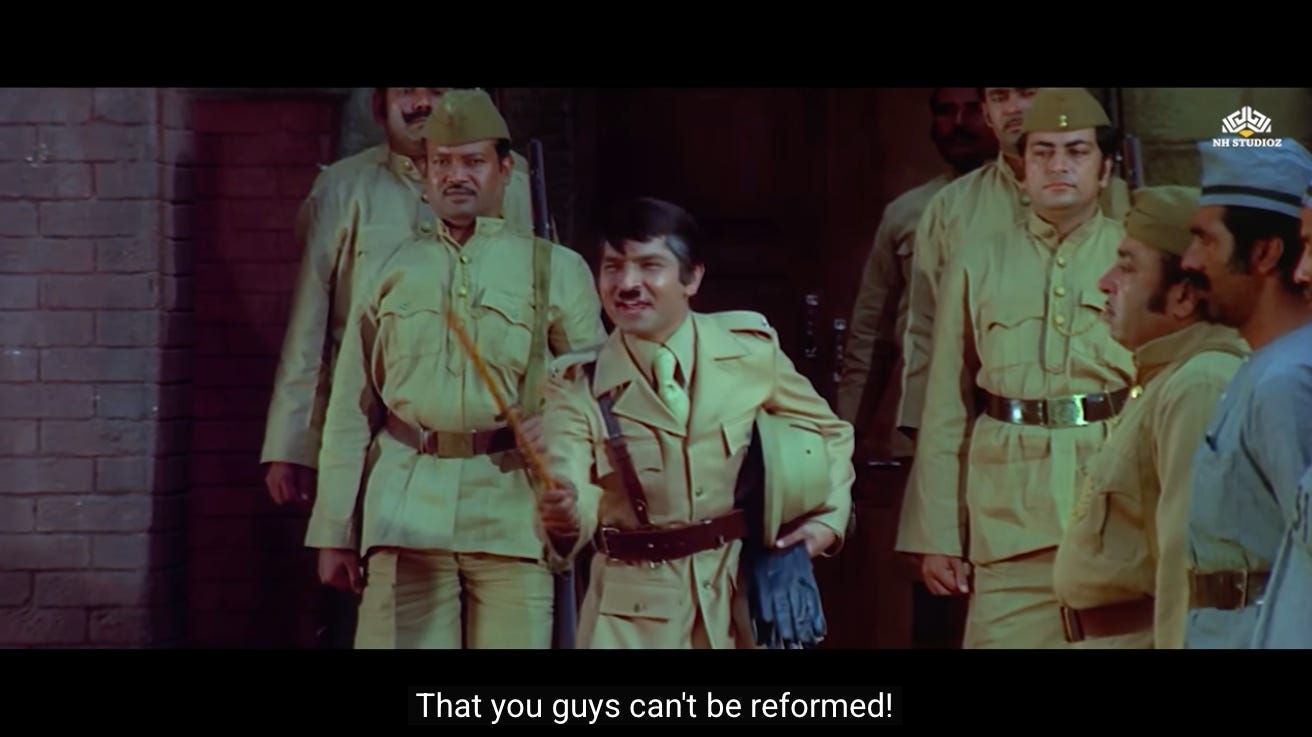
Here again, the British-era Jailer represents the system who sees prisoners as people who cannot be reformed. They do not deserve a second chance.
3. Veeru and Jai Attempt Burglary
In this scene, Thakur’s widowed daughter-in-law, Radha (Jaya Bhaduri), catches Jai and Veeru red-handed as they attempt to break into Thakur’s safe so that they can steal the cash and make a run.
She gives them the keys to the safe, telling them they can take her jewellery that she has no use for.
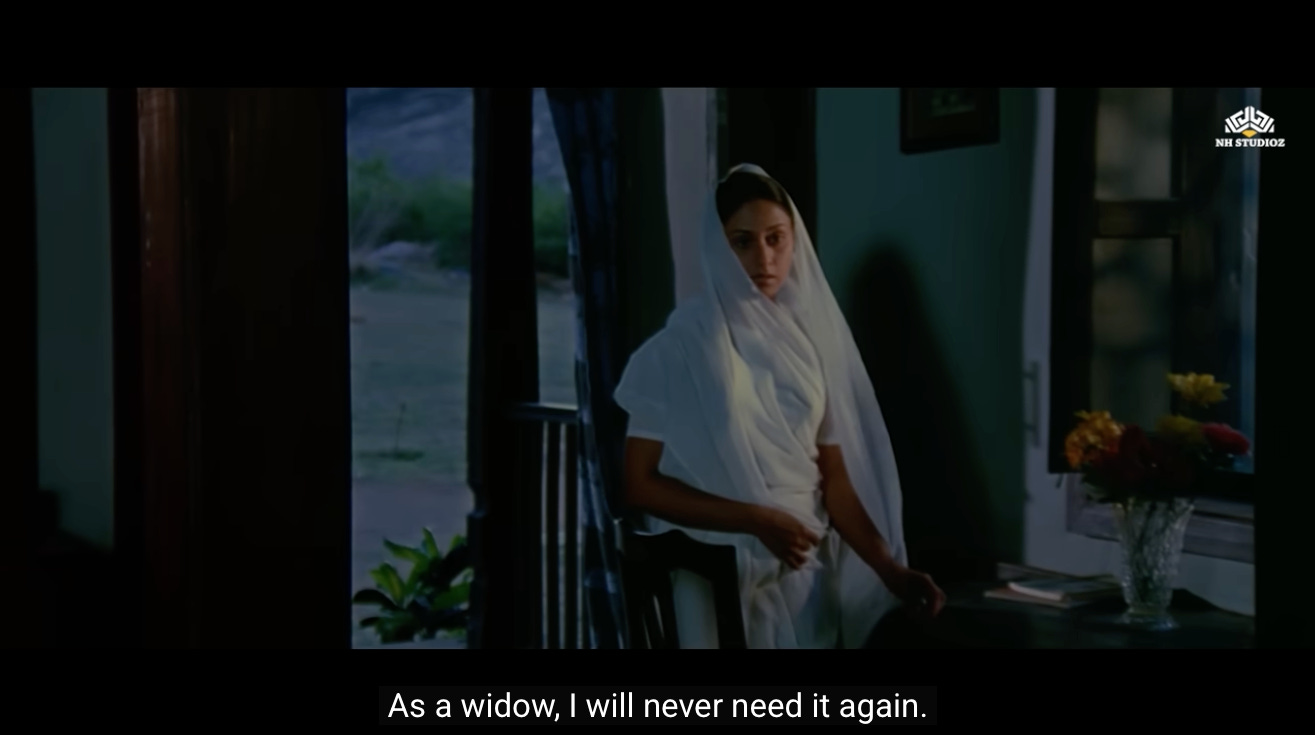
Radha is herself living a marginalized life after becoming a widow since Gabbar Singh massacred Thakur’s family. In this scene, all these discards of society come together.
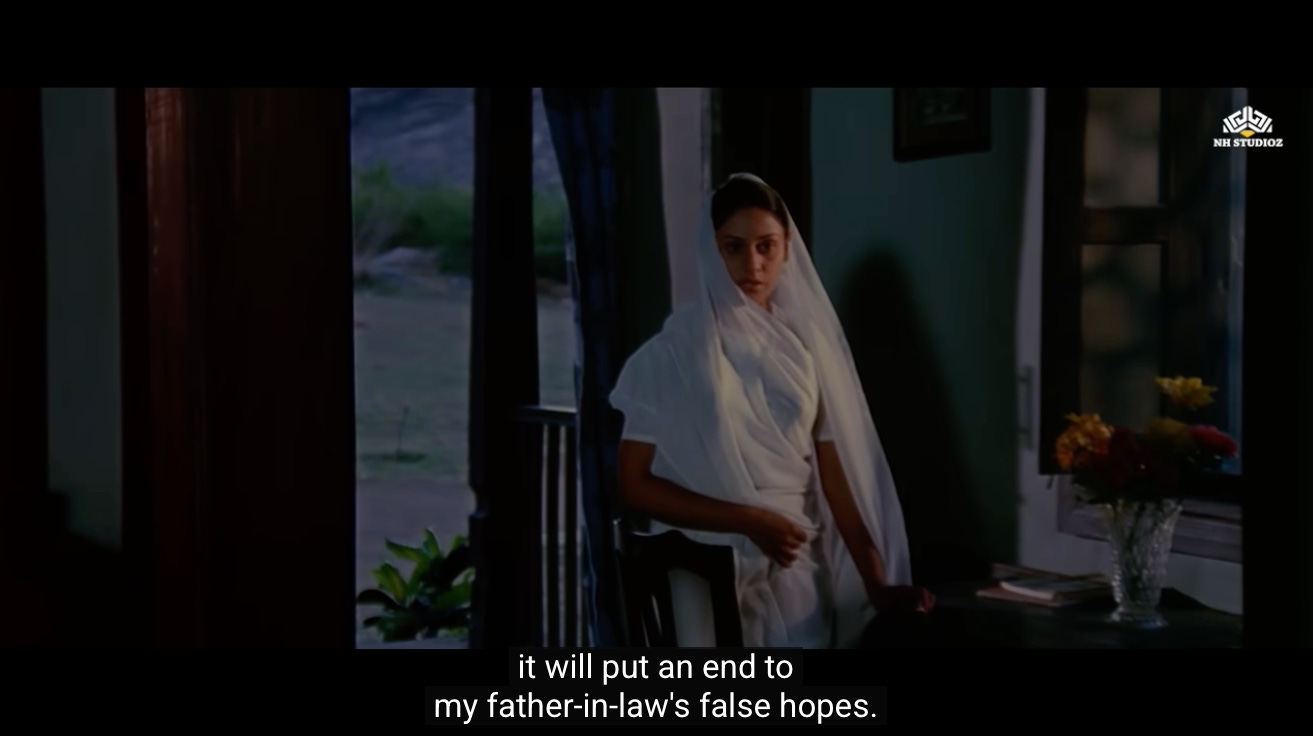
Radha knows that Thakur has given Jai and Veeru an opportunity to redeem themselves. But she believes that this is a false hope.
Being a widow who can never remarry, she herself has no hope. She doesn’t know if people can indeed change if they were given a chance. Would she ever experience what it means to be in love again? She has perhaps resigned herself to being a walking-dead, and she is not sure she can come out of it. So why would Jai and Veeru change? Is she bitter that men get second chances but not women?
When she sees Jai and Veeru trying to break into the safe, her belief is confirmed. People don’t change. She gives them the keys to the safe and tells them to run away with the jewellery and the little bit of Thakur’s savings. What good is the jewellery to her anyway? And the loss of money will make Thakur also realize that people who are good-for-nothing are condemned to remain so.
Here Radha takes on the role of the system which believes that even if people were given a second chance, it is not possible for them to change. Jai and Veeru’s behavior validates this.
4. Jai and Veeru’s Shift
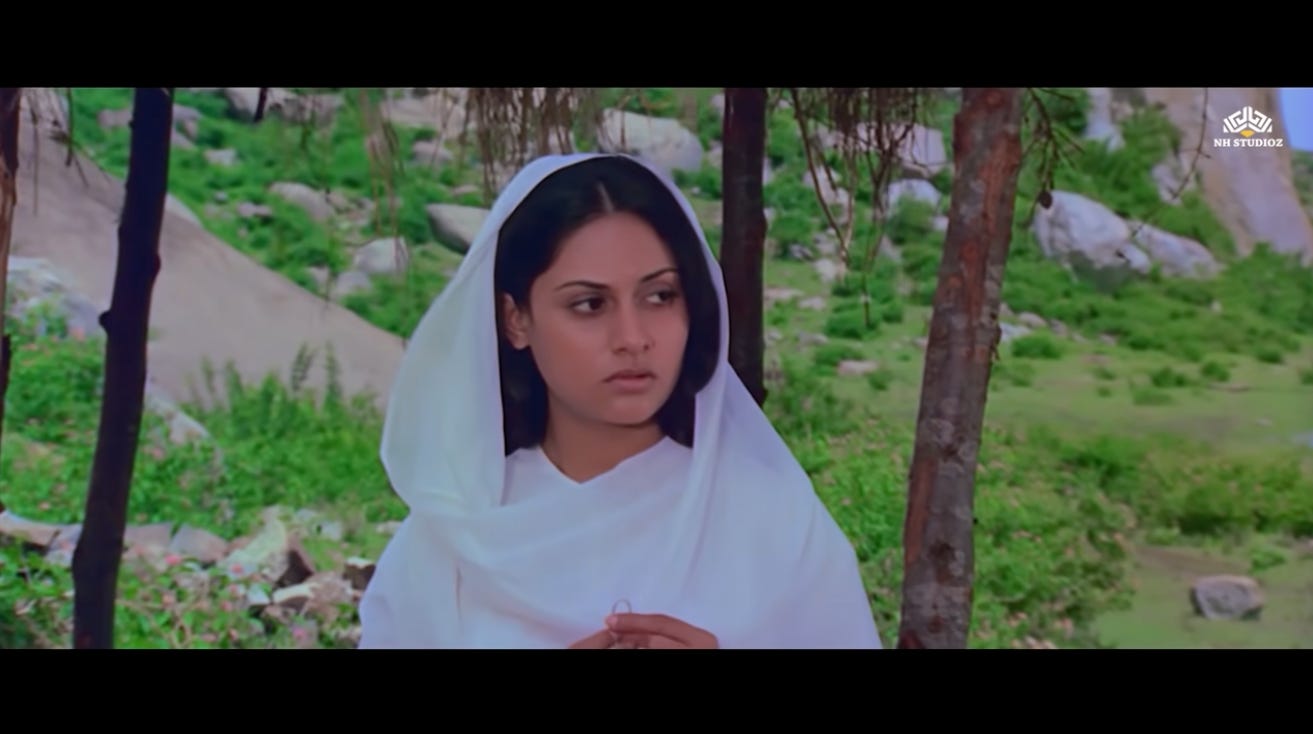
Embarrassed at being caught red-handed committing the burglary, the next morning Jai goes to Radha to return the keys to the safe. She does not take it when he extends his hand with the keys to her, until he assures her that what happened the prior night, won’t happen again.
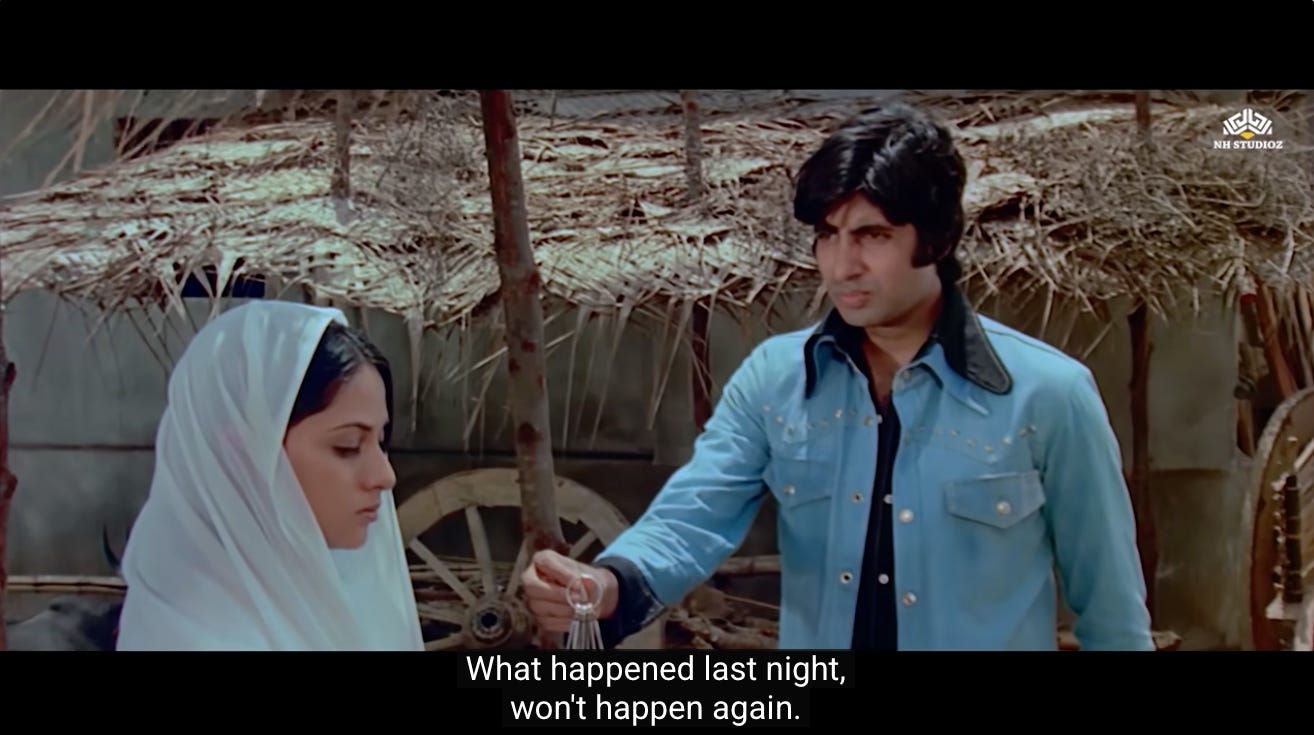
This is the first moment where we see a shift in Jai and Veeru, and their decision to not go back to being petty thieves. Perhaps they realize that Thakur’s assignment represents the second chance they were never given.
The scene ends with the camera panning Radha, and her expression shows that her belief that people don’t change has been challenged.
5. Jai and Radha
A few scenes later, there is a remarkable scene between Jai and Radha which has no dialogues. It is a light moment. Jai is returning from shepherding goats and he is sitting atop a buffalo. He seems to be struck by her presence.
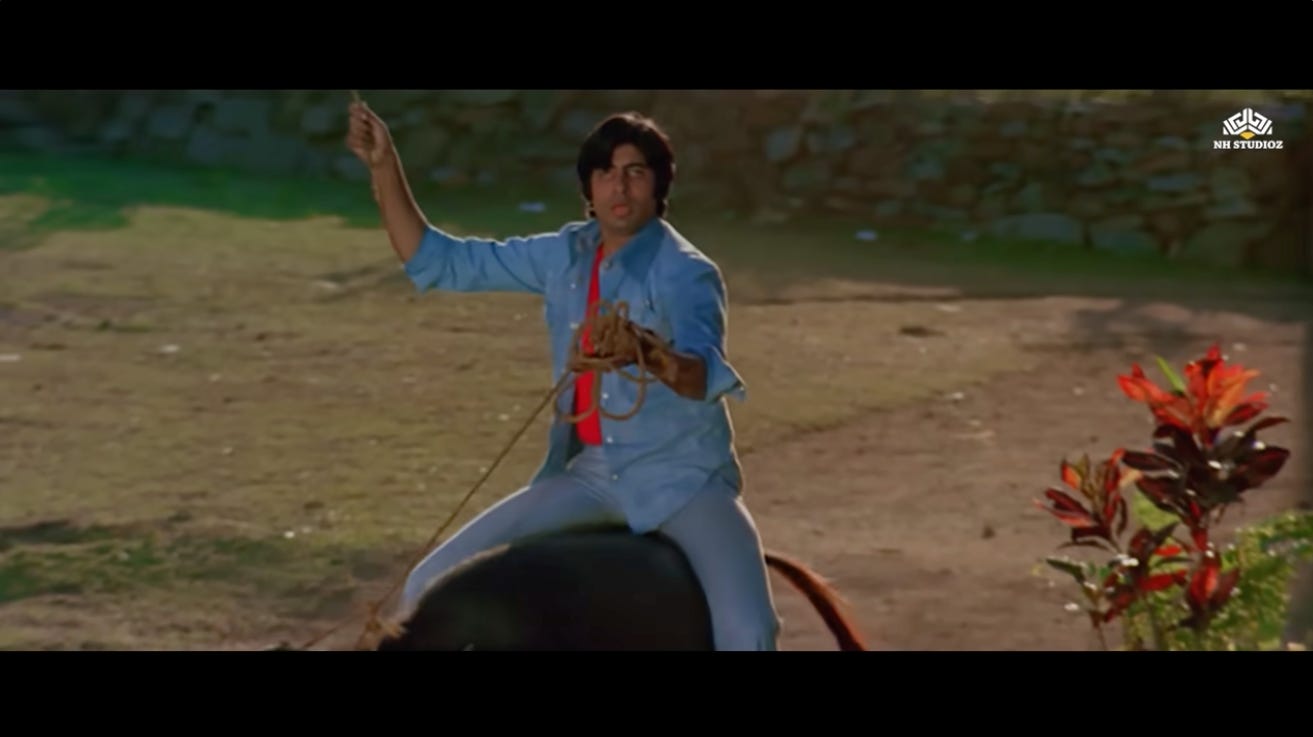
She is amused by his expression, and the fact that he stands with the stick raised in his hand even when he is off the buffalo.
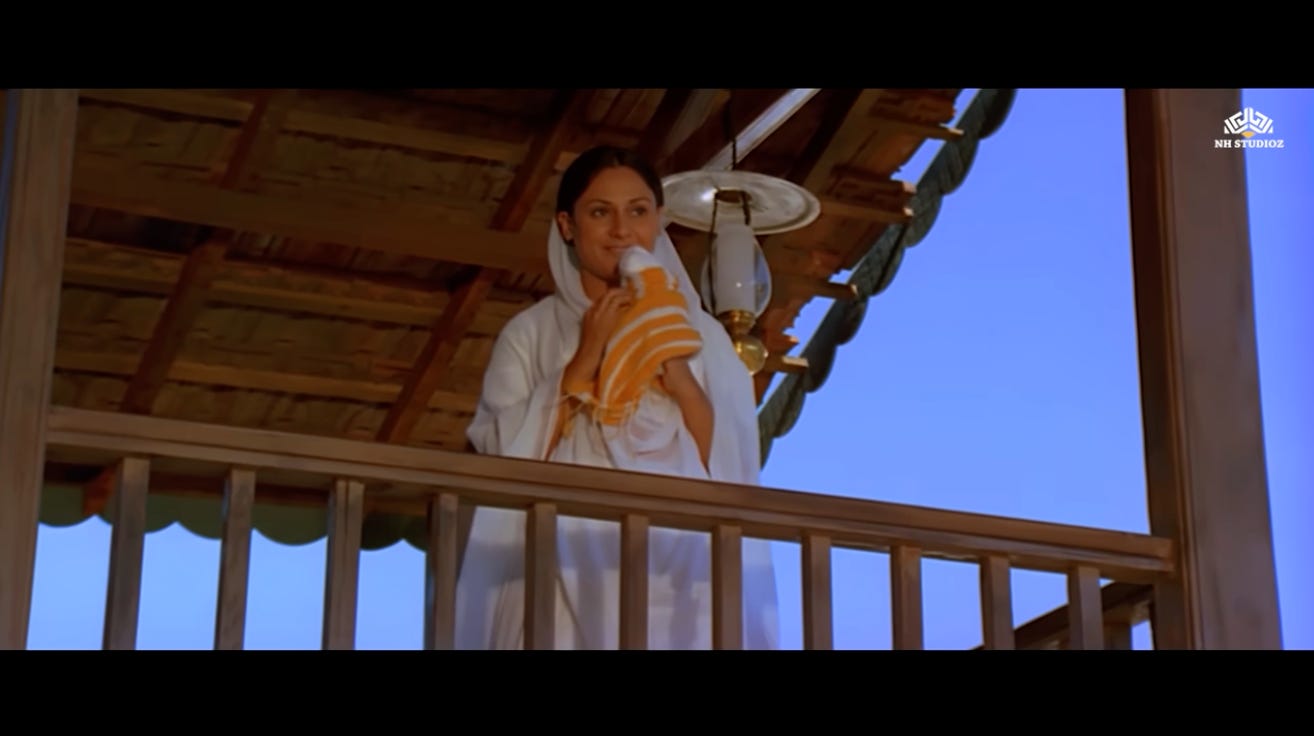
This is the first instance where perhaps in a very long time Radha has found a reason to smile.
In this moment, she is beginning to feel the possibility of feeling something different from the resigned and barren life she has been living. Is she ready to give herself a second chance?
As Jai walks away from there, the scene ends with camera panning Radha’s face showing her expression, stealing a glance at Jai.
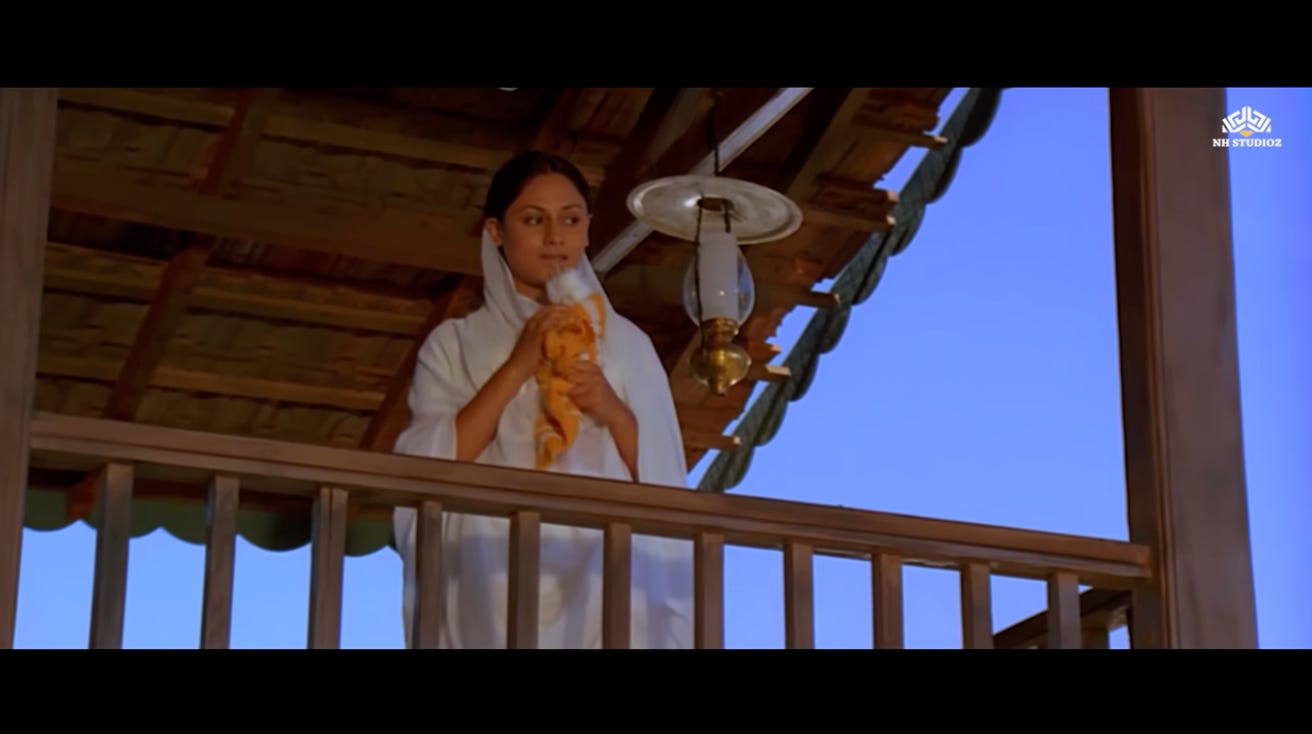
Their chemistry is further accentuated in the very next scene when Radha is turning the lights out at dusk while Jai is playing his harmonica in the courtyard.
Both are aware of the other’s presence, and there seems to be a slight awkwardness. Though they are far apart in distance from each other, they bring out the same awkwardness when one finds oneself suddenly alone in the room with one’s romantic interest.
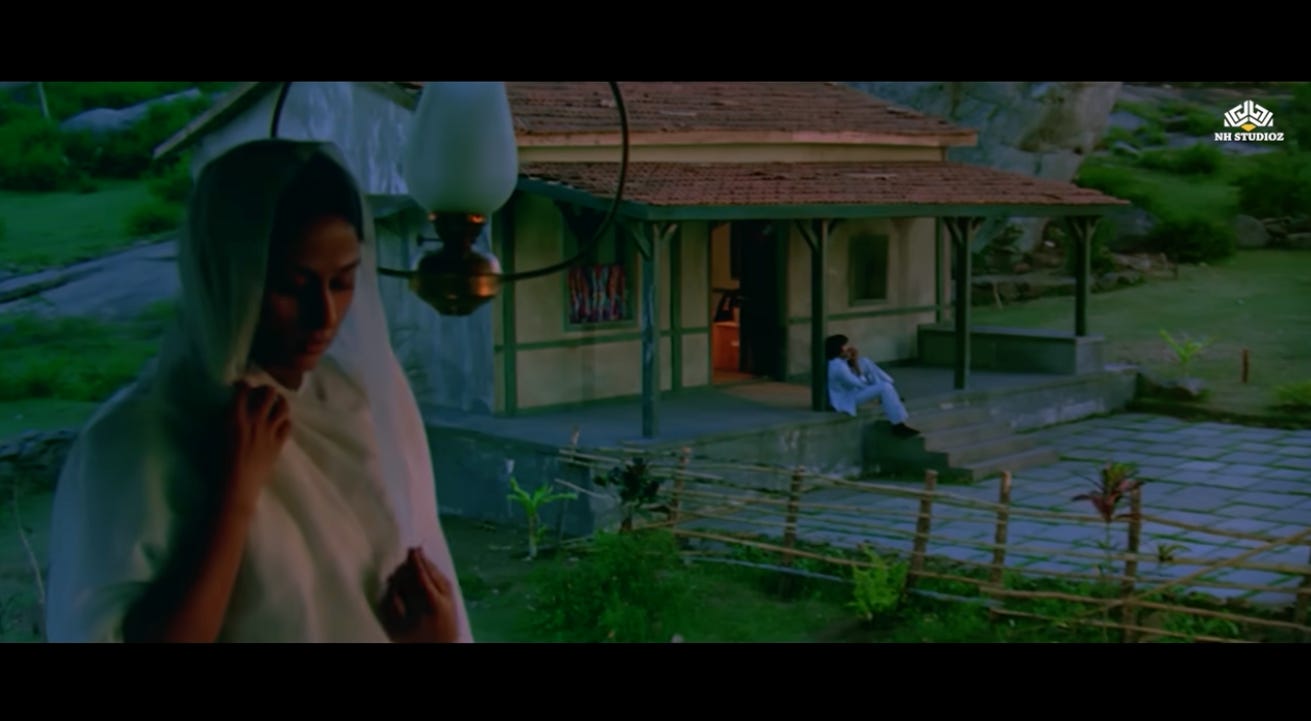
As she turns the lights out, both Radha and Jai steal glances at the other.
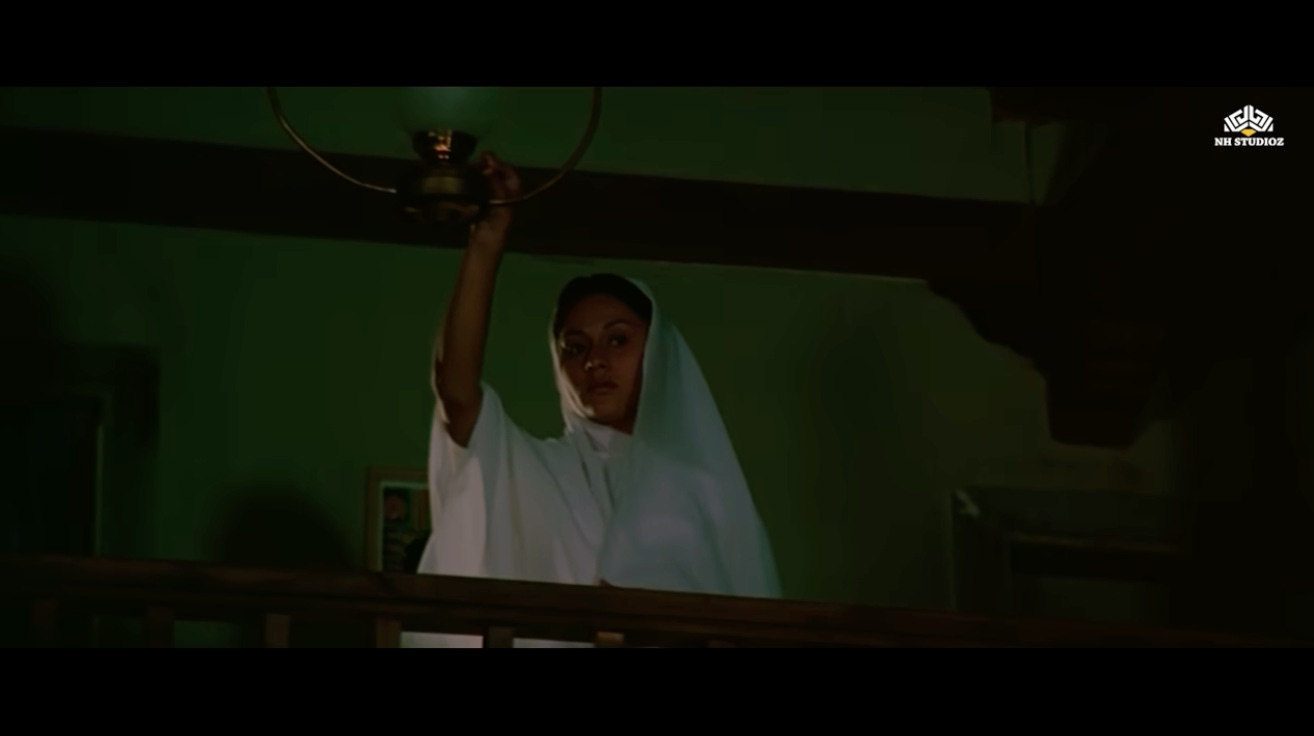
And they know that they are both looking at each other.
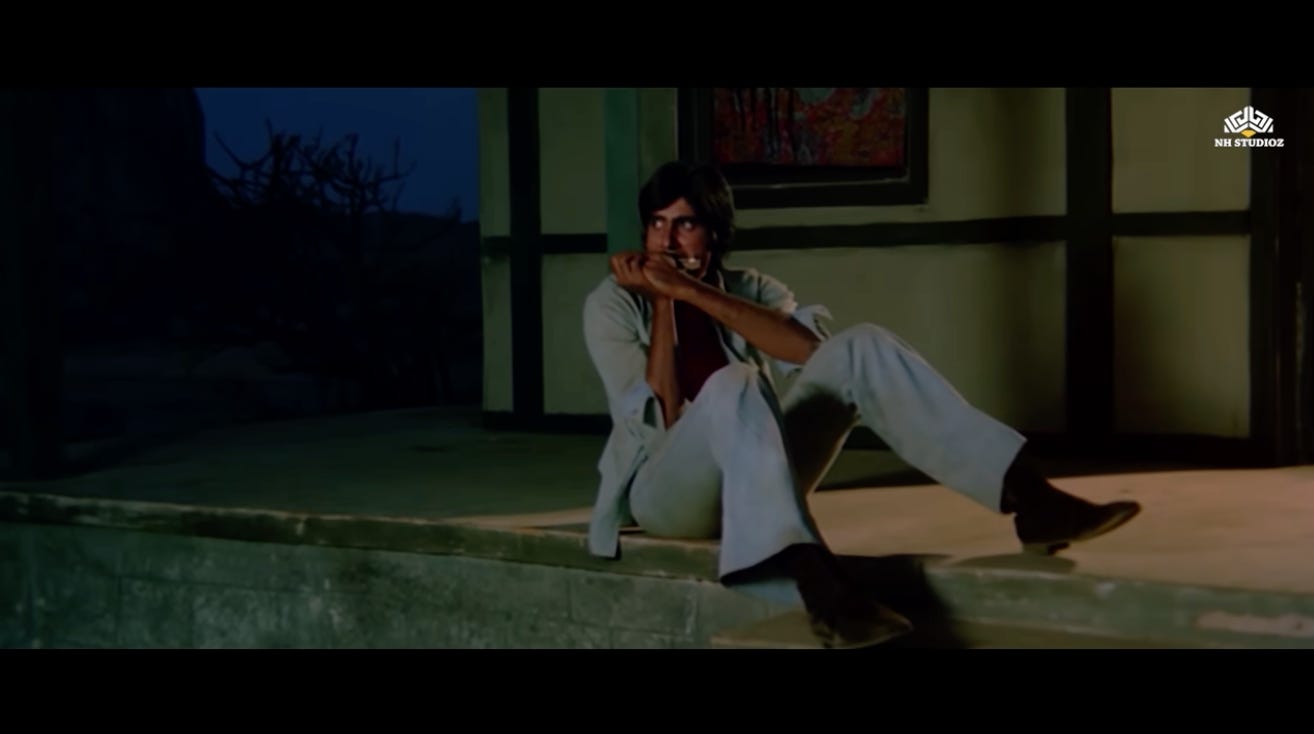
6. A Second Chance for Radha?
When Jai gets injured in the gunfight with Gabbar and his dacoits and returns back to Ramgarh, Radha runs to the courtyard. This is the first indication that in her heart she has decided to give herself a second chance.
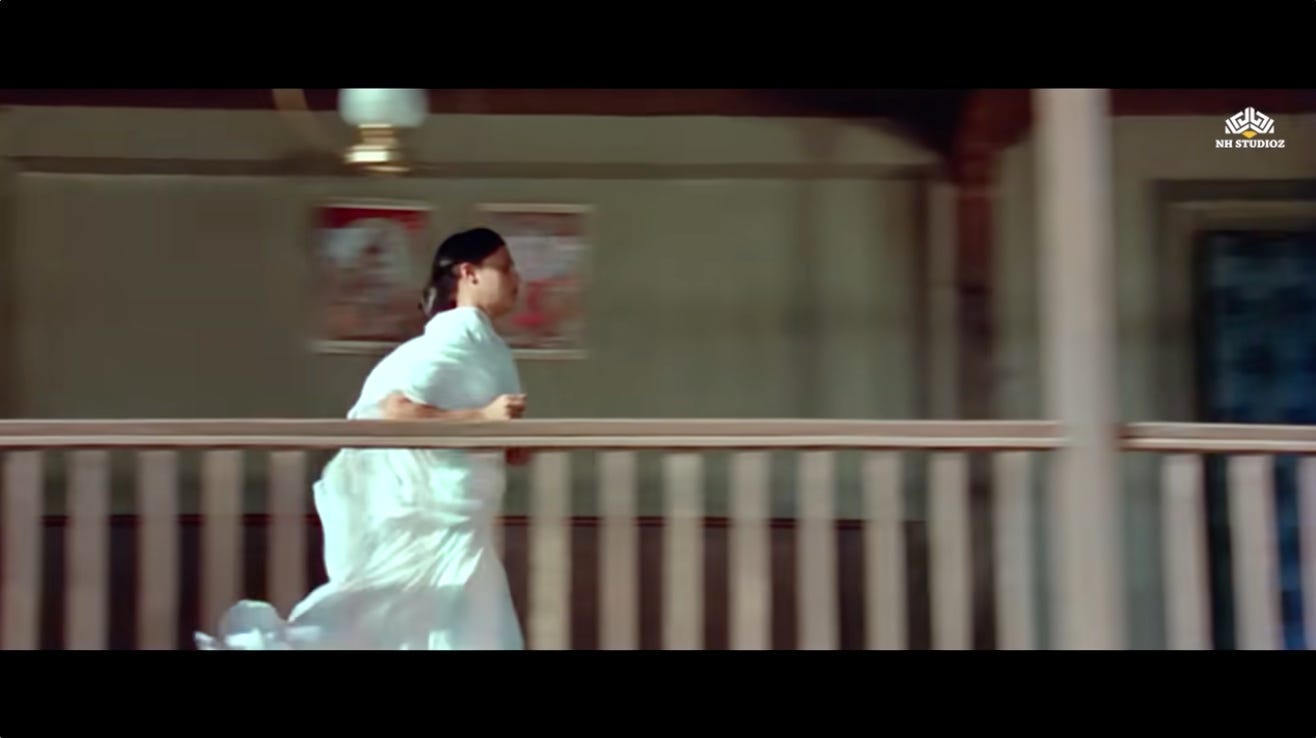
But she realizes that the patriarchal society will look at her feelings as transgression and immoral, and stops herself short when she becomes aware of Thakur’s presence. She doesn’t have the freedom to express what she feels, and perhaps she may never.
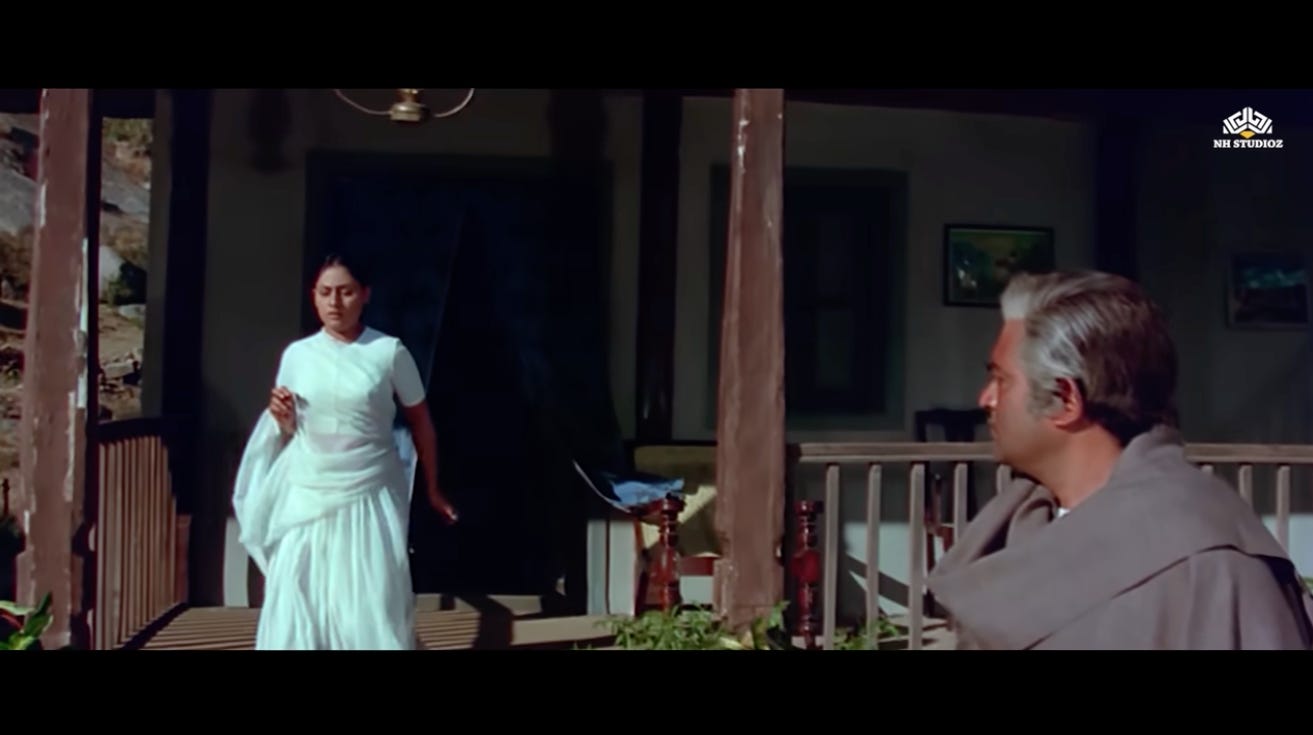
The camera pans to Thakur’s expression and lingers there for a bit. At first he looks at her, surprised that she has run out like this.
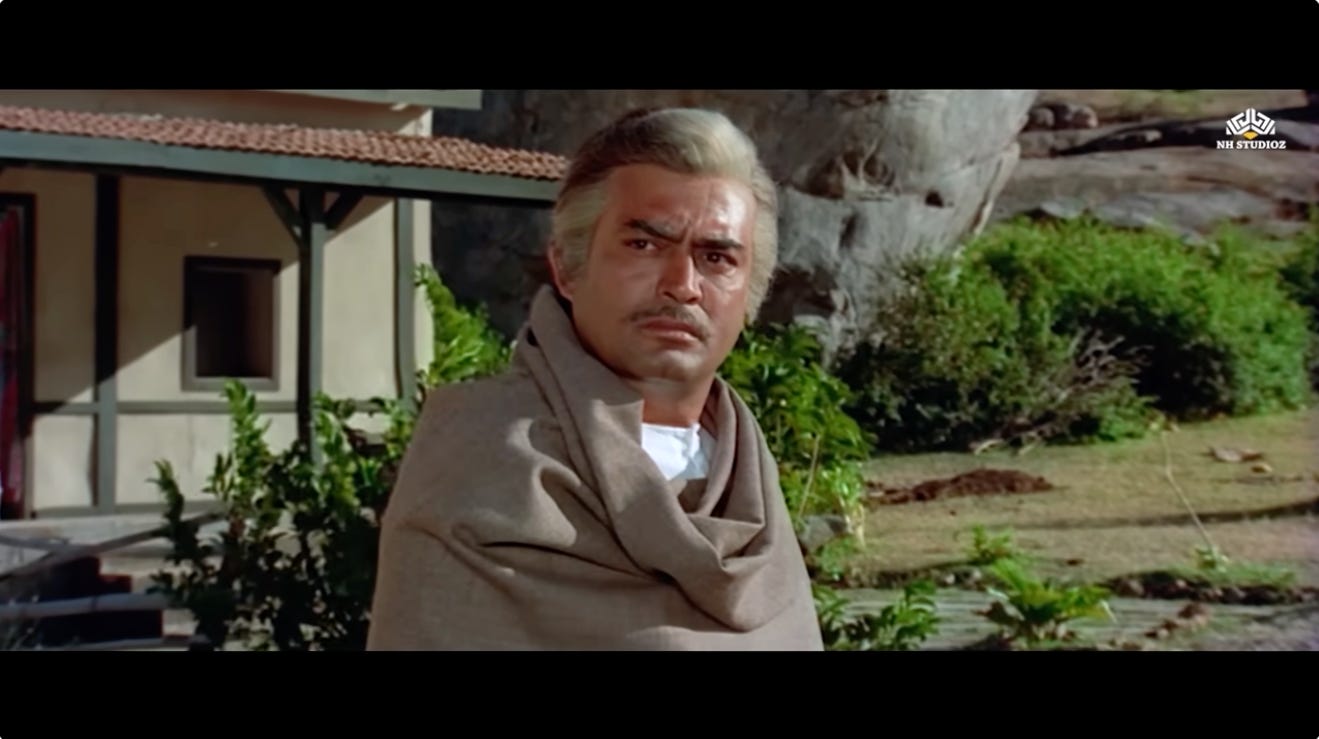
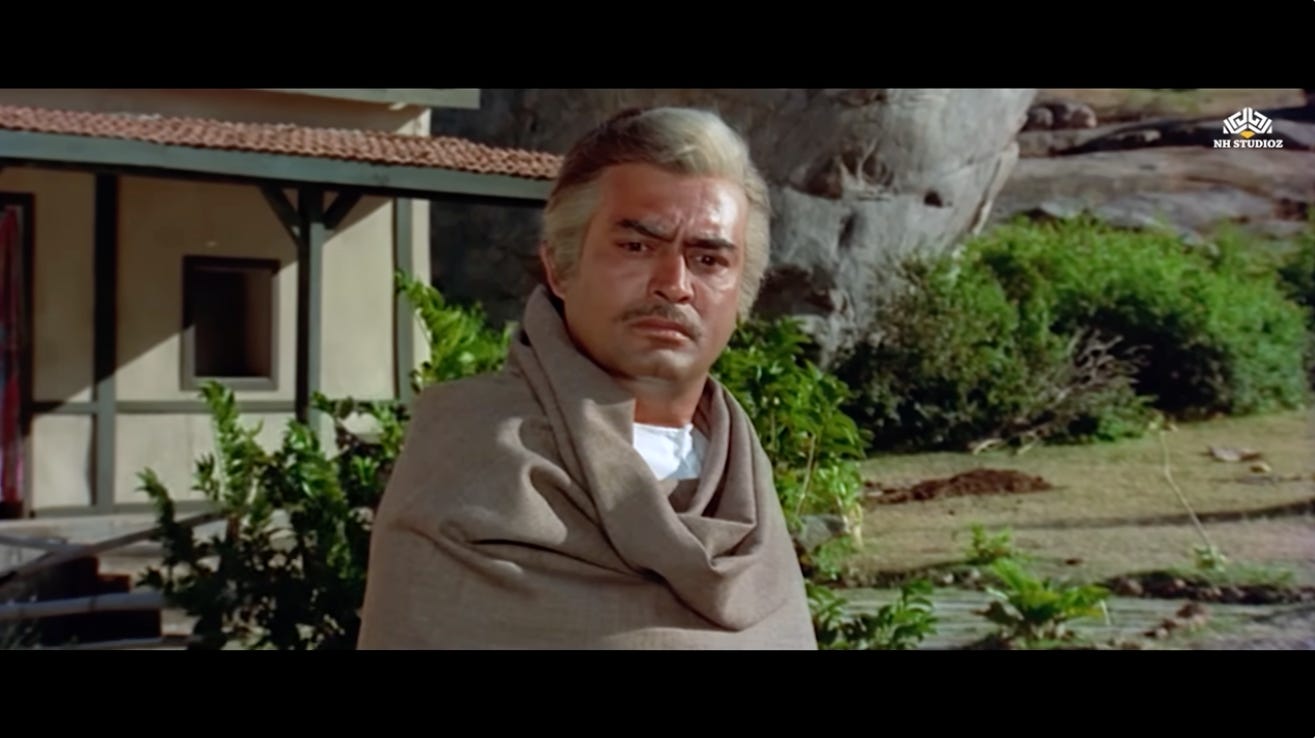
But in the next moment he looks down. It feels like in this moment, Thakur has realized Radha’s feelings for Jai, and for the first time perhaps has become aware that even Radha deserves a second chance at living life, after having been a young widow for all these years.
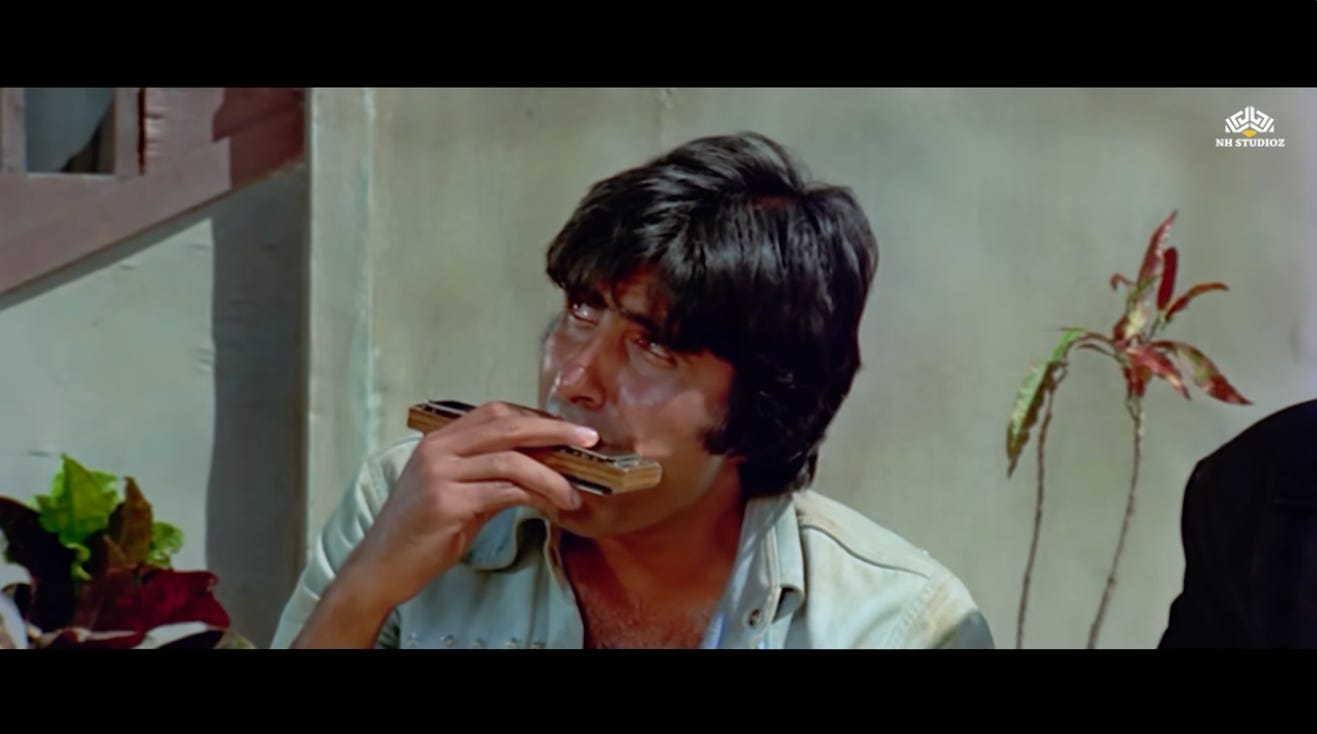
It has not escaped Jai’s attention that Radha was at the courtyard when he came back injured.
The scene ends with Radha coming upstairs and closing the door behind her.
Is she closing the door on the possibility of a second chance, realizing that it is just impractical and not something that her father-in-law and society would approve of?
Is she thinking that she should just put everything behind her and resume her life of quiet resignation?
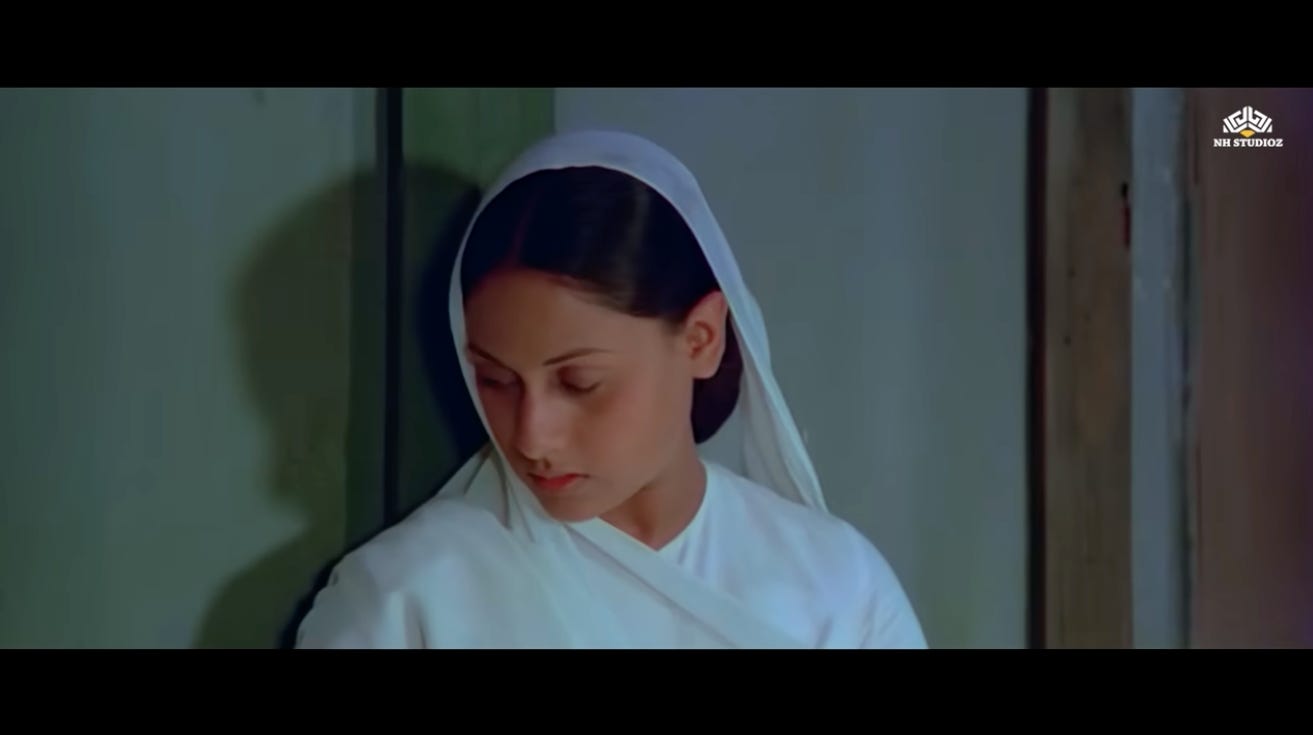
7. The Proposal
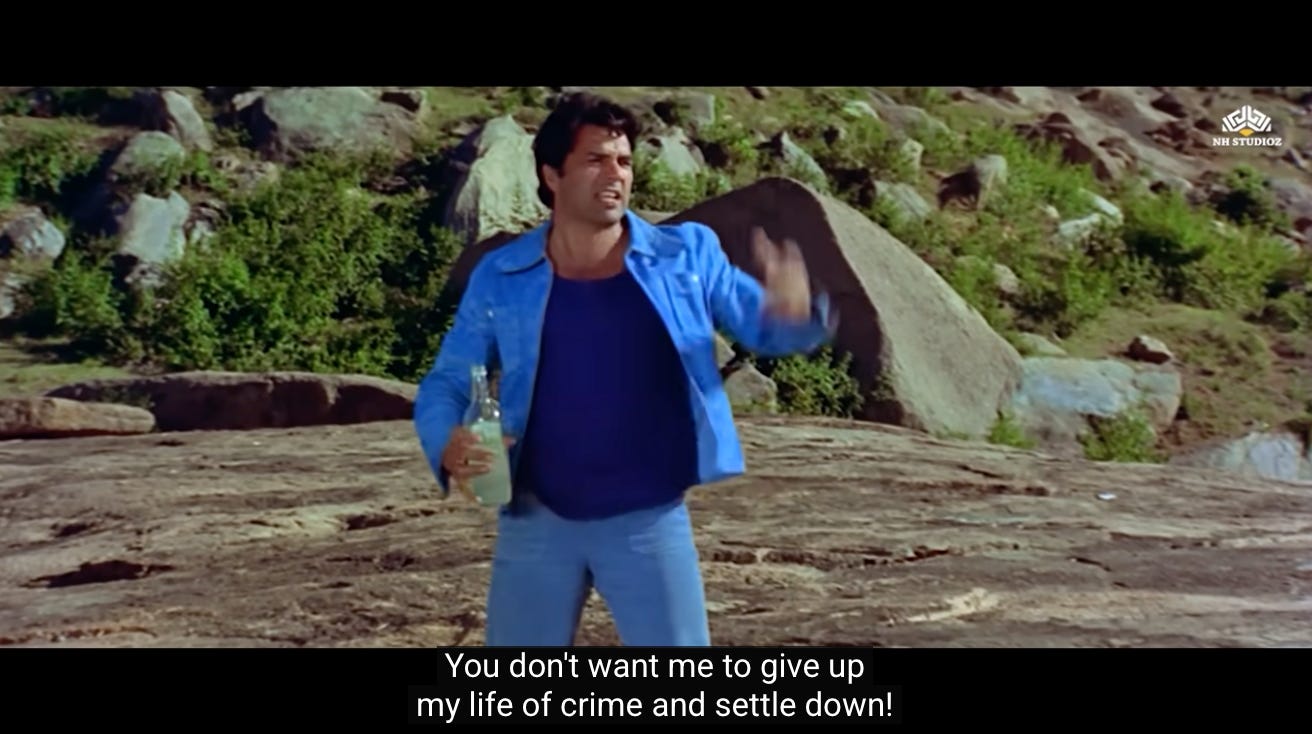
This sequence starts with Veeru asking Jai to take his proposal to Basanti’s (Hema Malini) Mausi (Leela Mishra) and ask for Basanti’s hand in marriage with Veeru.
When Jai is reticent about this, Veeru taunts Jai that he is the rigid society that does not want Veeru to give up his life of crime and settle down. Is it so difficult for Jai to imagine that his friend should have a second chance and rehabilitate his life?
The next scene shows Jai and Mausi with Jai having placed Veeru’s proposal for Basanti in front of Mausi.
Mausi represents the society who evaluates individuals by a certain yardstick, character, income, credit history (!), etc. These are attributes that the marginalized petty thieves are unlikely to possess, and hence they would automatically disqualify themselves. No second chances as a result.
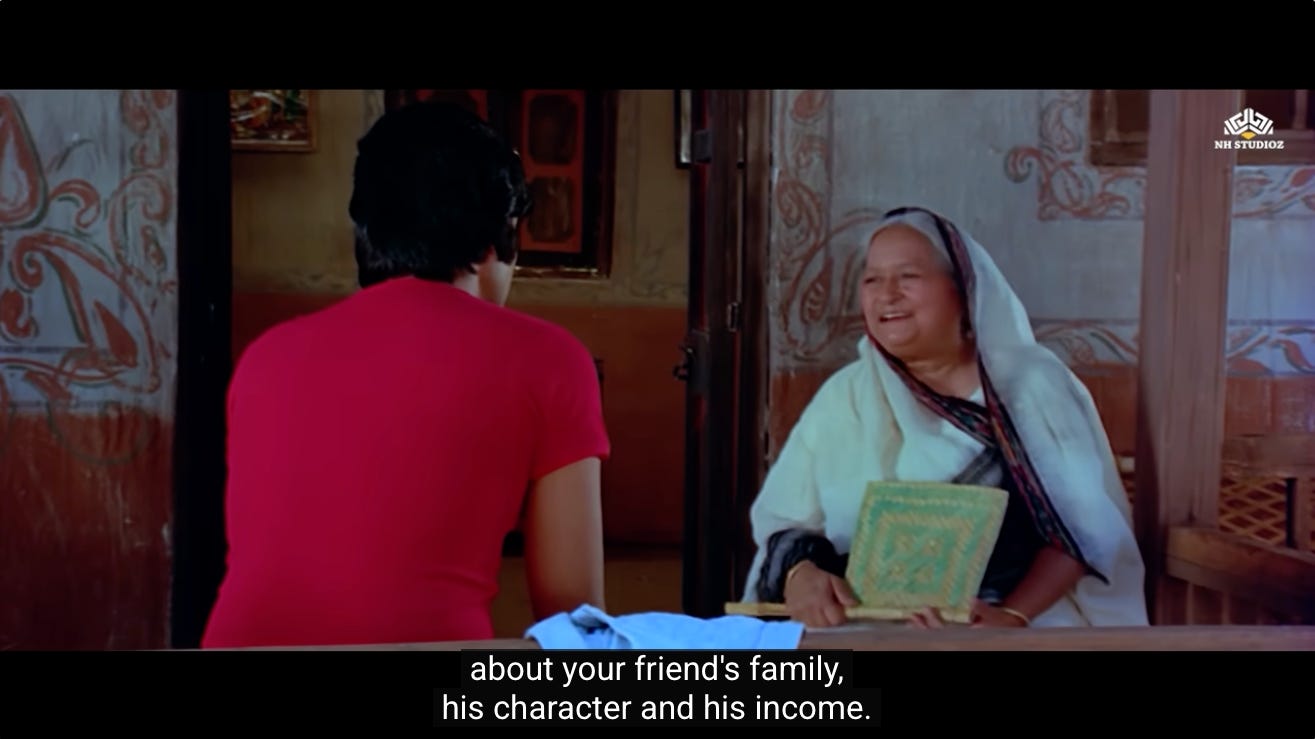
This scene is written as a comedic sequence, where Jai does his best to make sure that Mausi is aware of his friend’s reality, and it evokes much mirth.
However, the dialogues reinforce the central theme, that when people are given a second chance, they will hold themselves accountable. Jai tells Mausi that once Veeru and Basanti get married and Veeru shoulders family responsibility he will also find a way to earn.
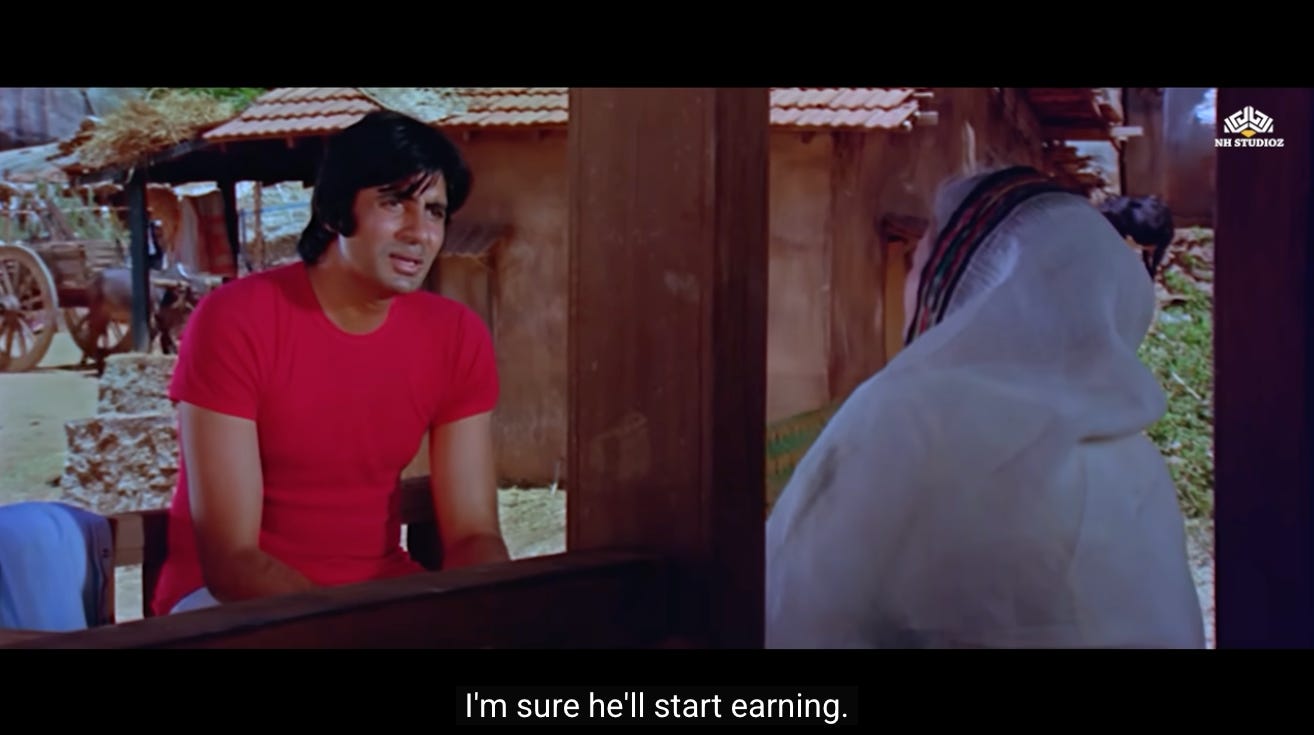
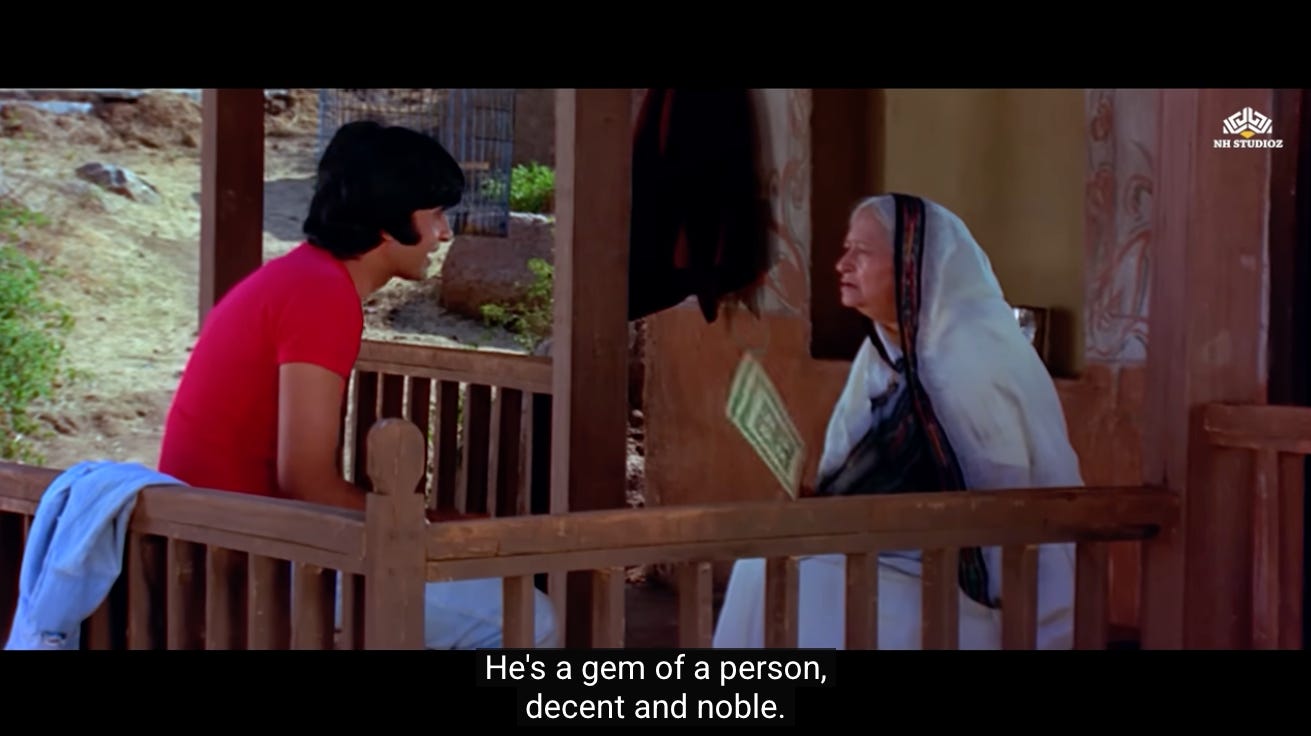
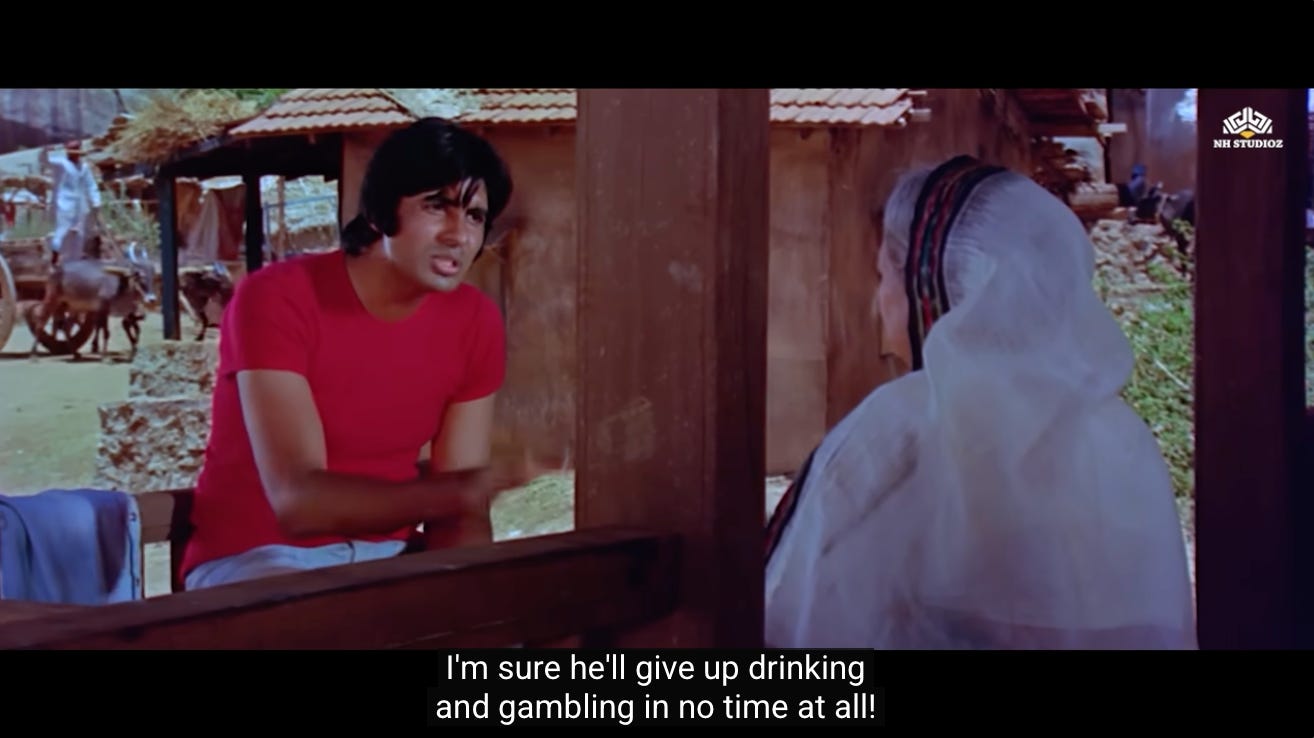
The rest of the dialogues in the scene are comedic gold as Jai tries his best to show his friend in a good light despite being real about all of his shortcomings. This conveys the message that we must look at the good side of people if we truly want to give them a chance to change.
This is reflected in Mausi’s dialogue that despite all his friend’s vices, Jai cannot stop singing his praises.
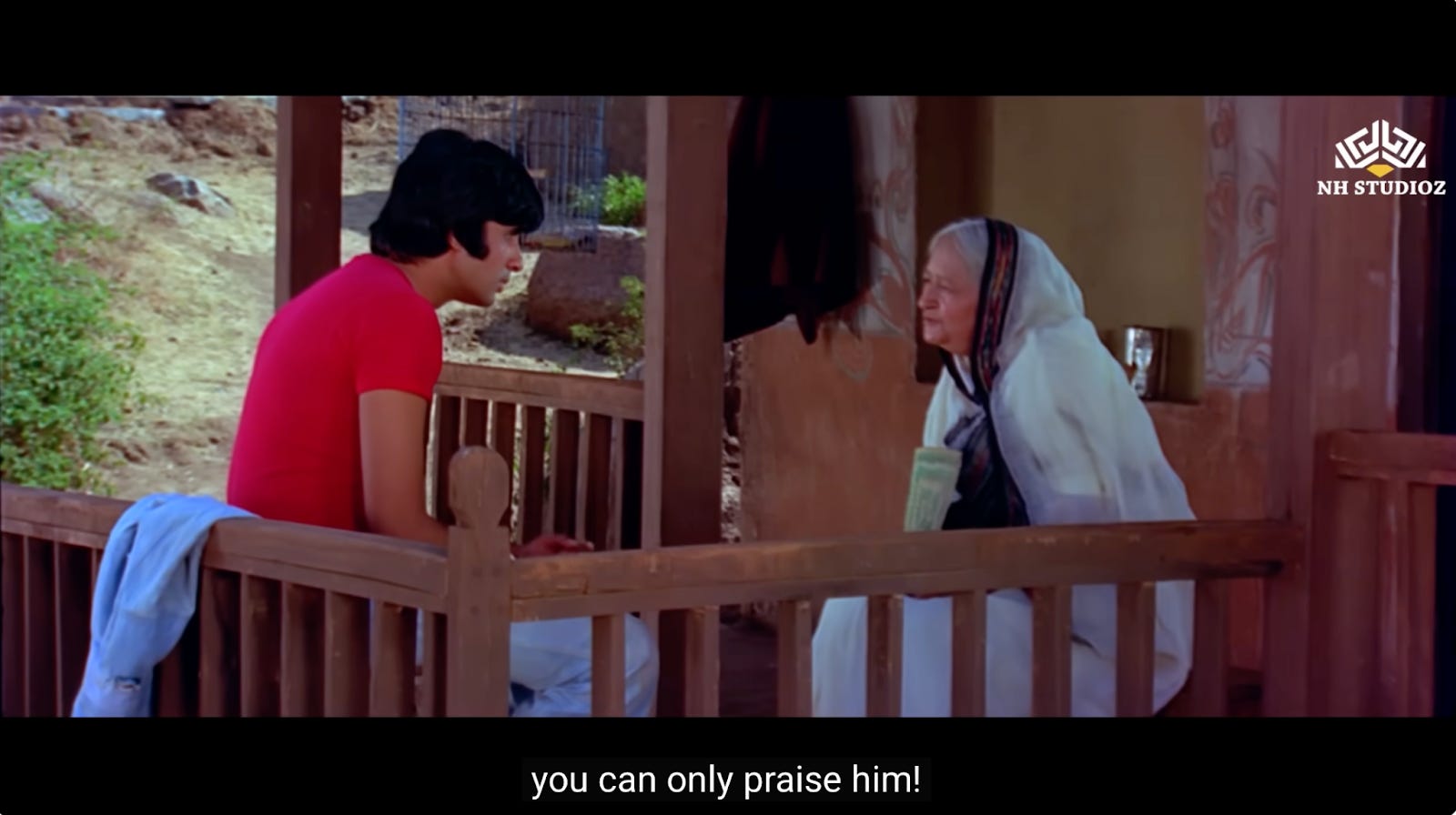
But the powers that be in society remain unconvinced.
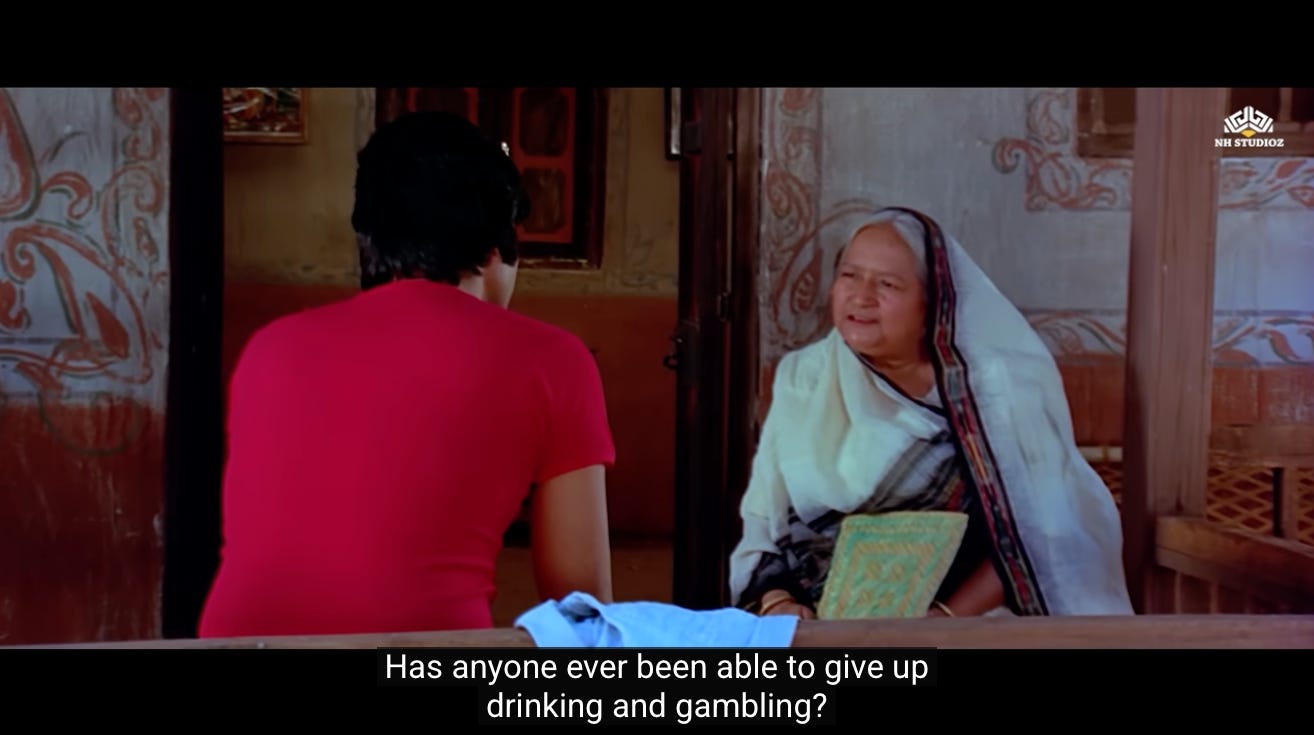
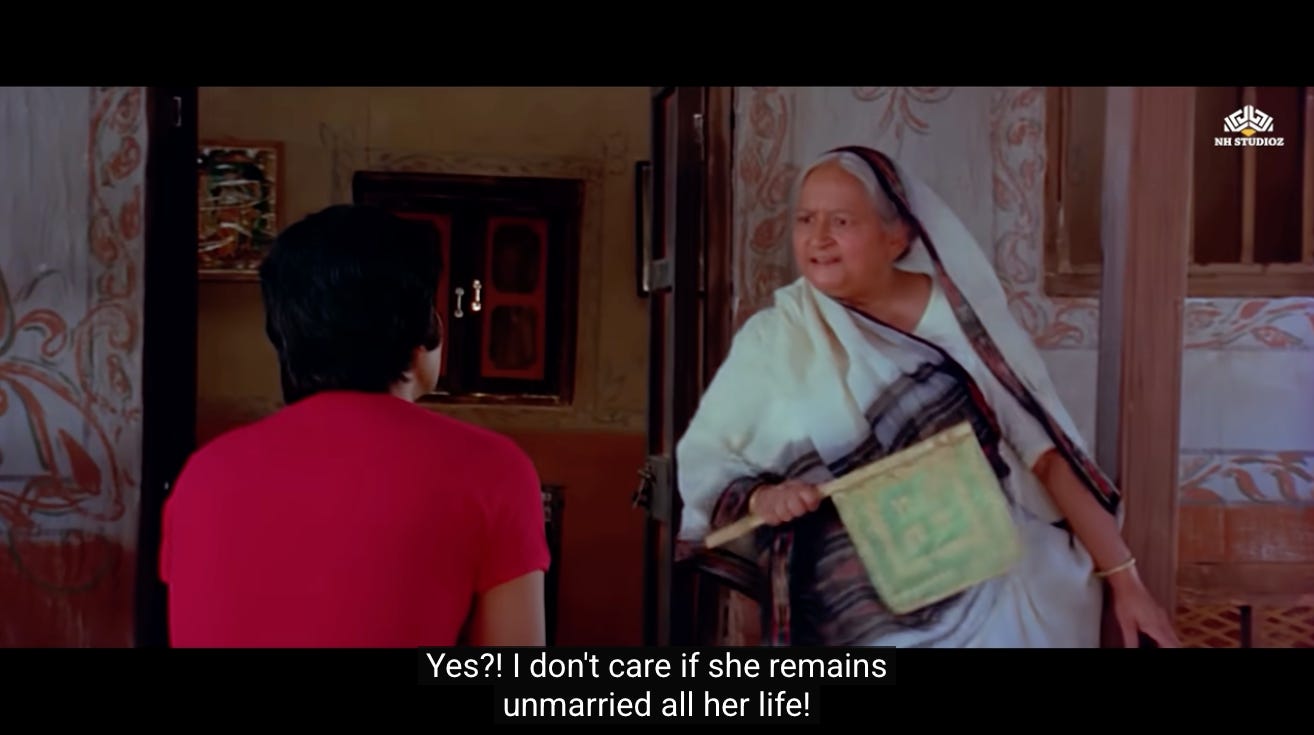
Alas, there are no second chances in Mausi’s book! Of course, we know Mausi is not left with a choice!
8. The Second Proposal
The scene of Radha turning the lights out in the courtyard and Jai playing on his harmonica is repeated again, with similar chemistry between them. However, Radha seems to have resigned herself to her fate of a lonely life.
In the next scene, Jai informs Veeru that he has also made the decision to marry and settle down.
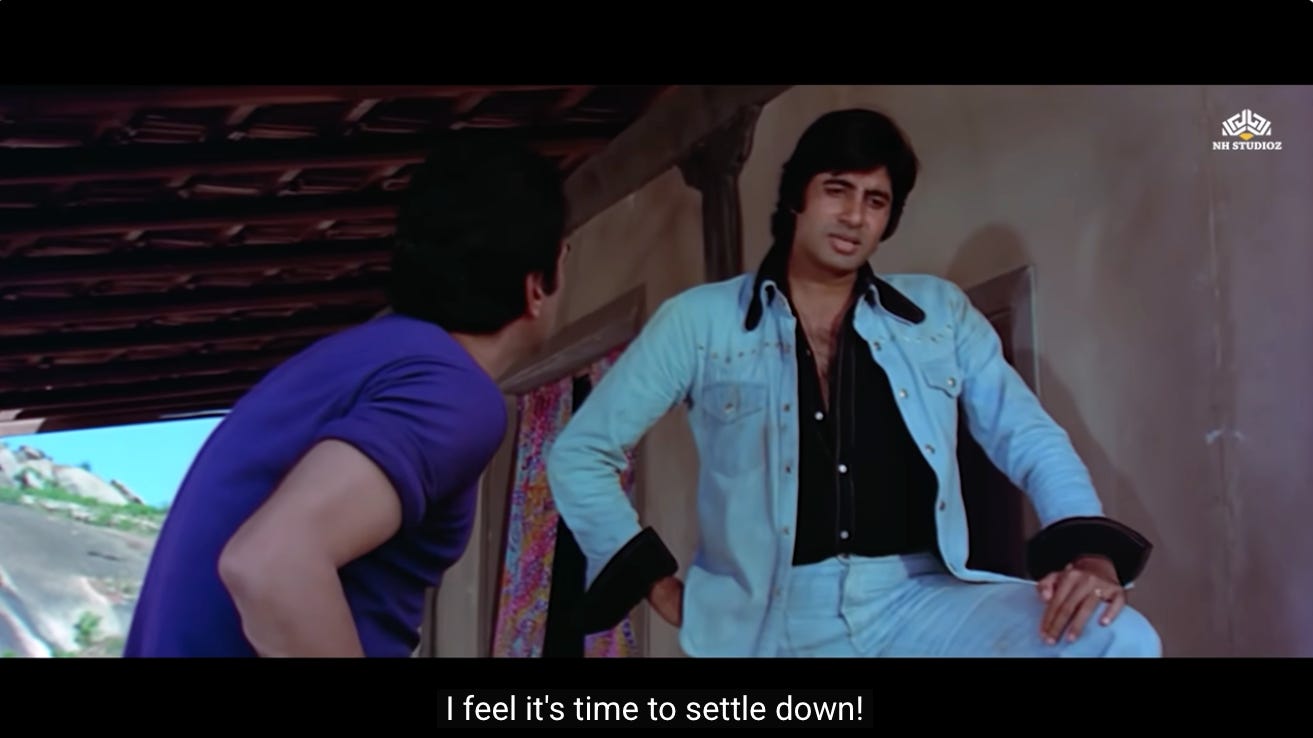
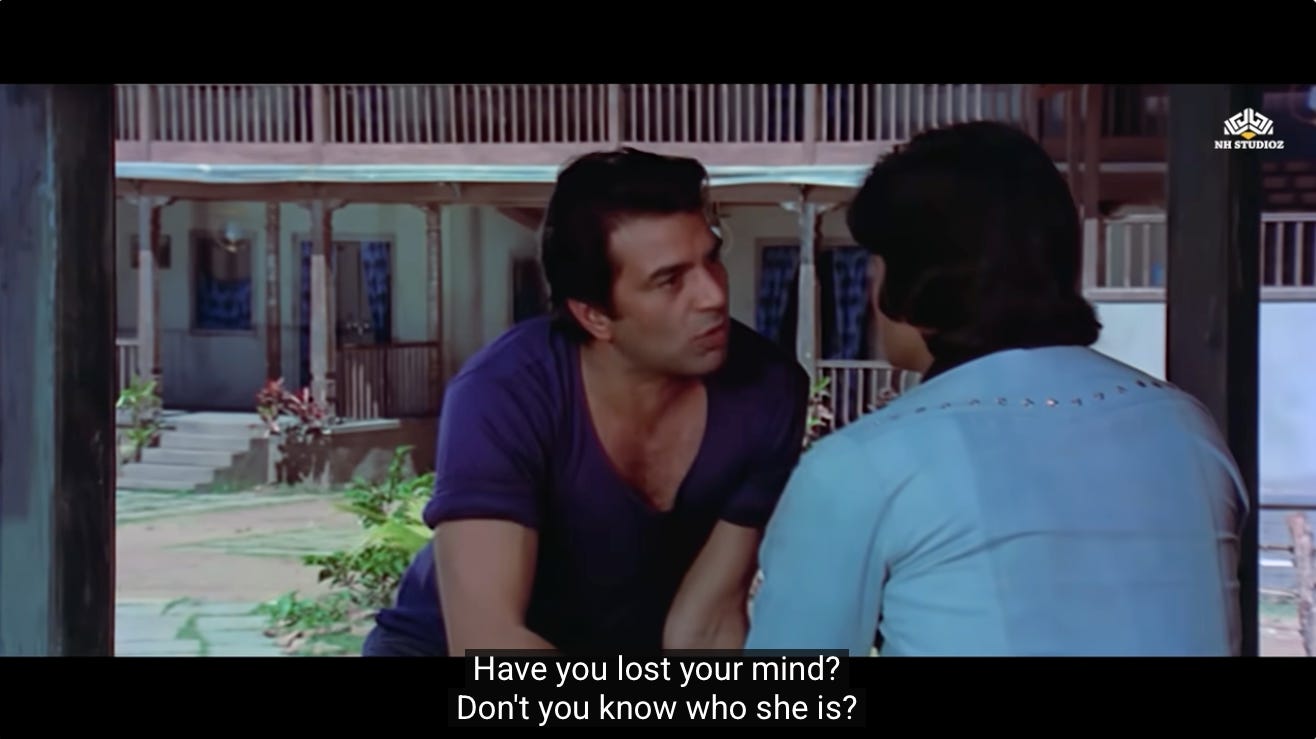
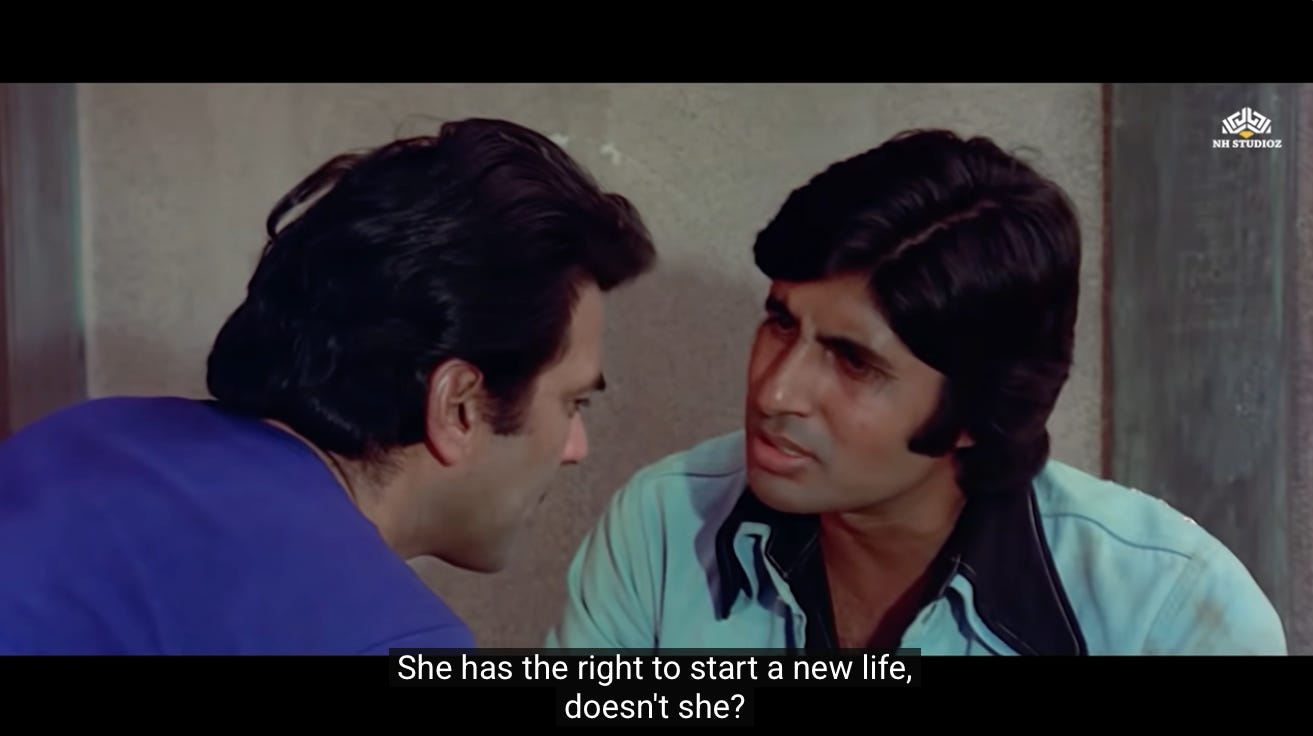
When Jai tells Veeru that he has decided to marry Radha, Veeru expresses disbelief. He takes on the role of the rigid society who finds this incredulous. How could Jai even entertain the thought of a second chance for Radha?
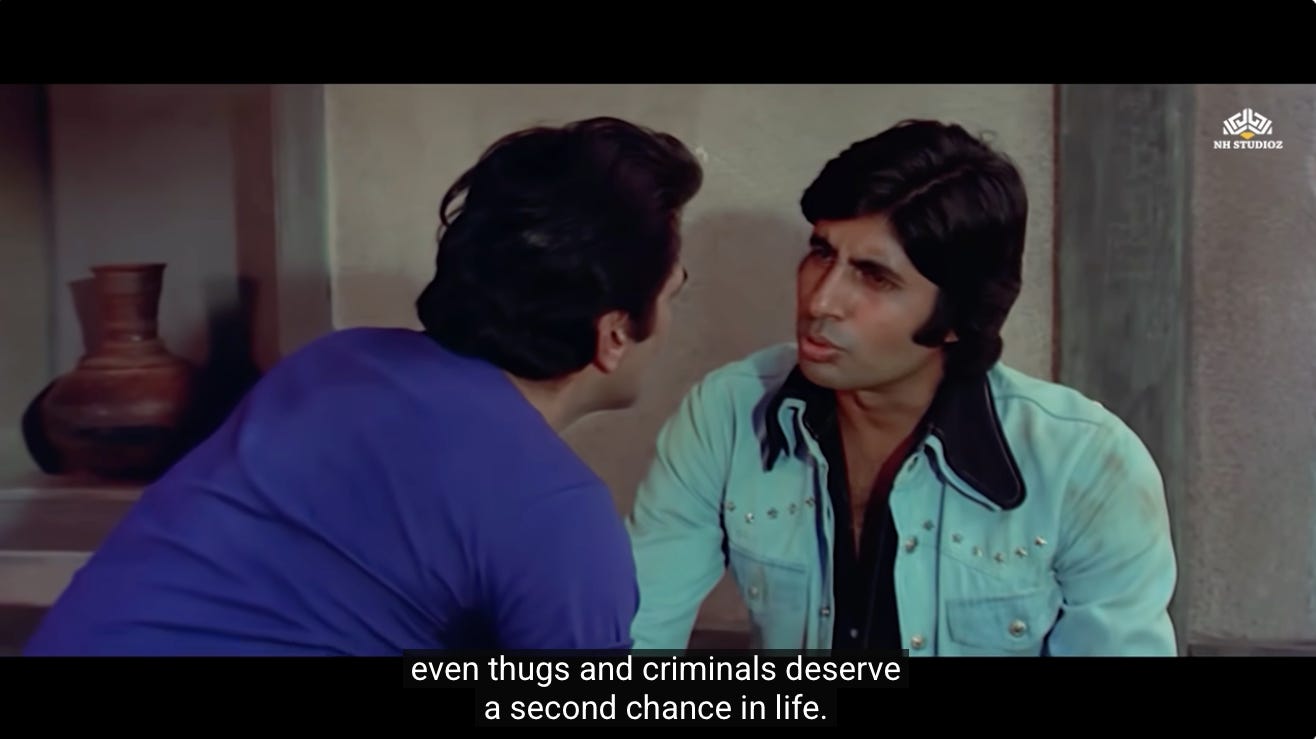
Jai responds by saying that even hardened criminals are given a second chance to rehabilitate, then why shouldn’t Radha? This sequence again brings back the central theme of the film.
The very next scene shows Thakur in conversation with Radha’s father, Narmada ji (Iftekhar), discussing the prospect of rehabilitating Radha by arranging her marriage with Jai.
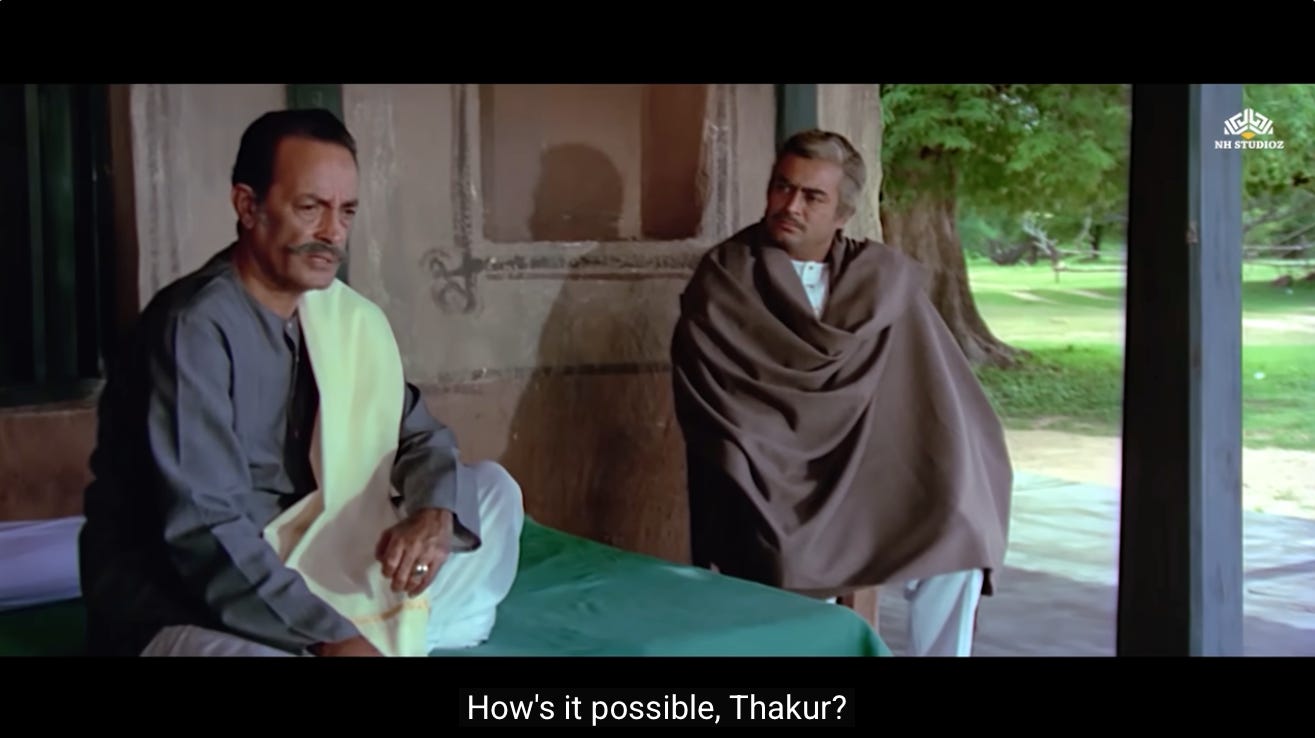
The fact that we are not shown Thakur coming to accept this indicates that in the earlier scene, when Radha rushed to the courtyard upon hearing of Jai’s gunshot wound, Thakur’s expressions showed that he had come to the realization that Radha also deserved a second chance.
Radha’s father now represents the rigid society and system that deems this impossible.
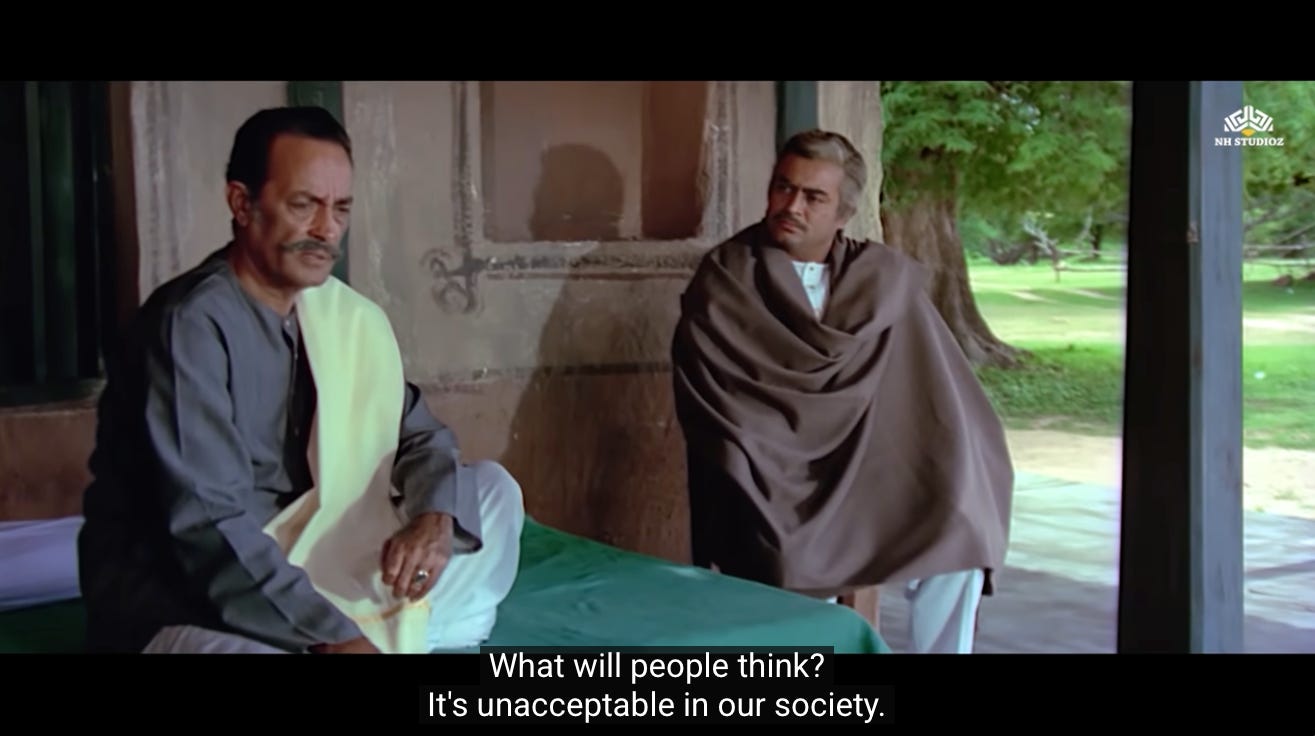
Narmada ji’s dialogue shows the real problem in society. Society is not really concerned about those it has discarded. It is only concerned about how it is perceived. What will people think? The classic, “Log kya kahenge?”
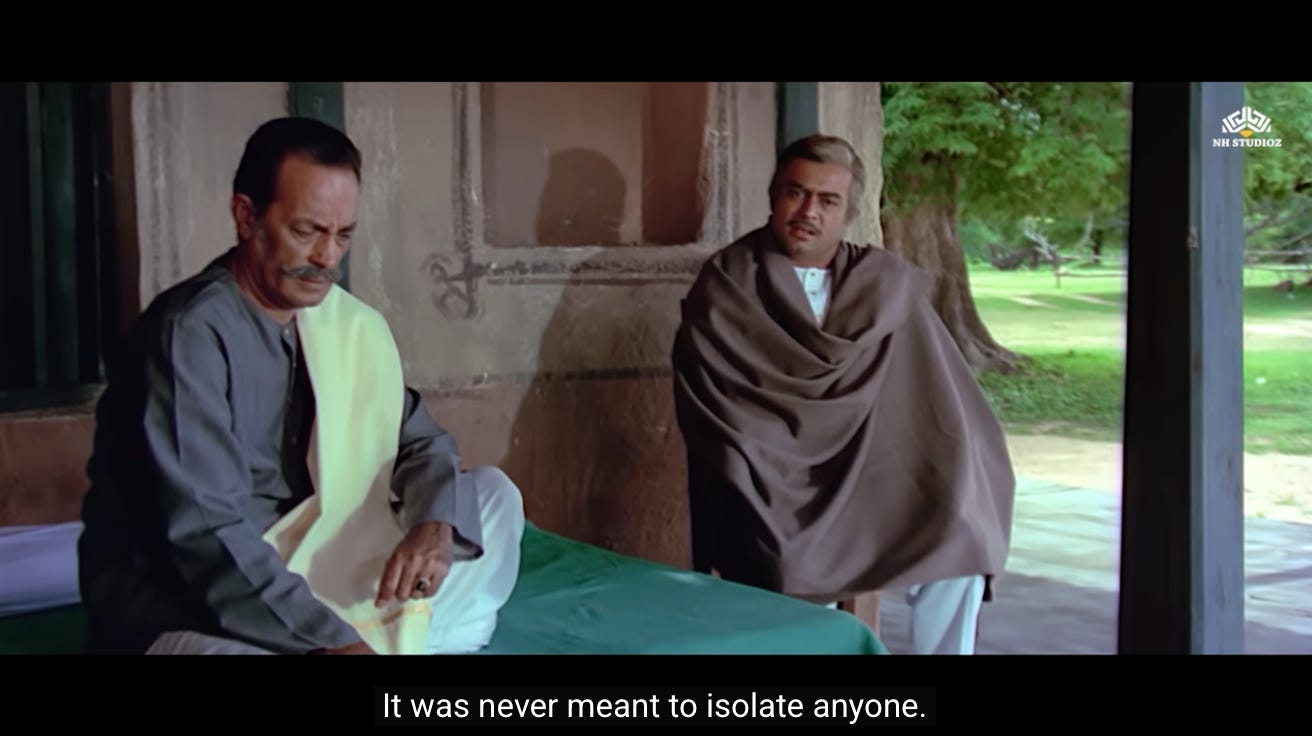
Thakur reminds Radha’s father that the purpose of society was not to isolate.
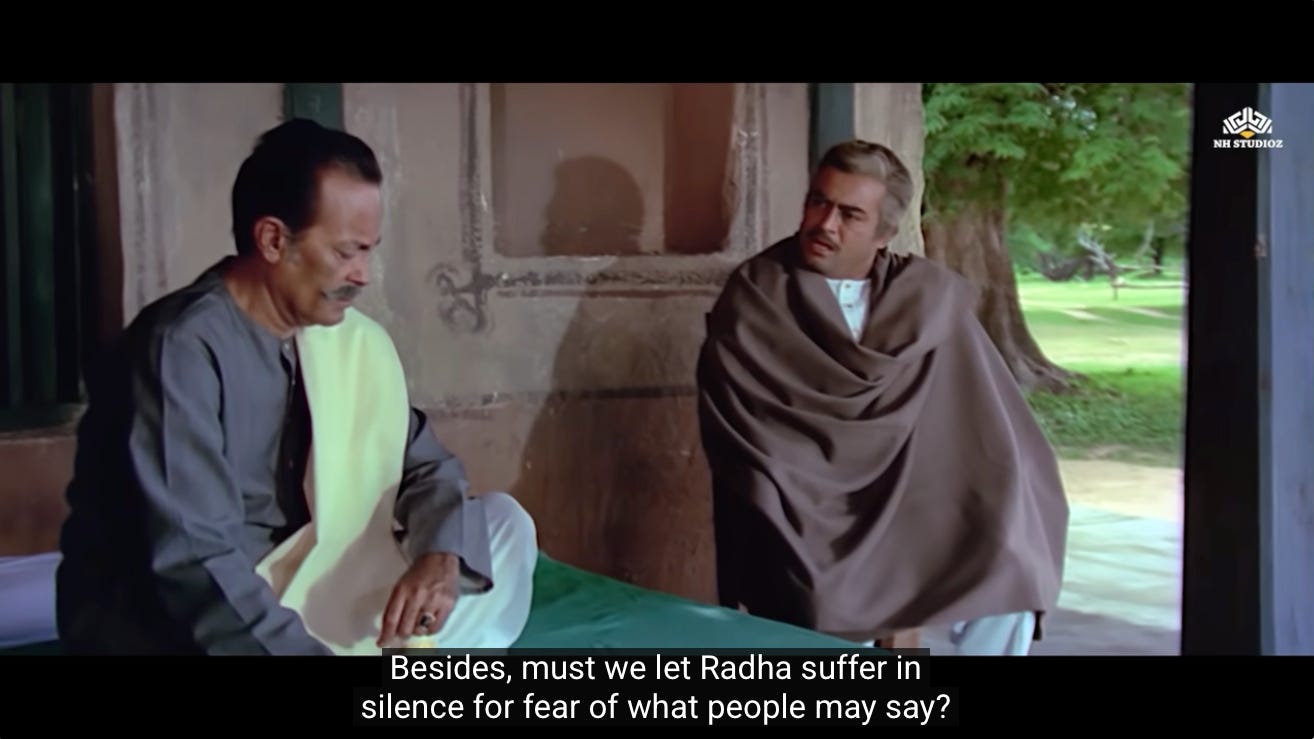
Thakur makes the case for Radha to get a second chance and not suffer because of how society wants to perceive itself.
But Thakur leaves the decision to Radha’s father.
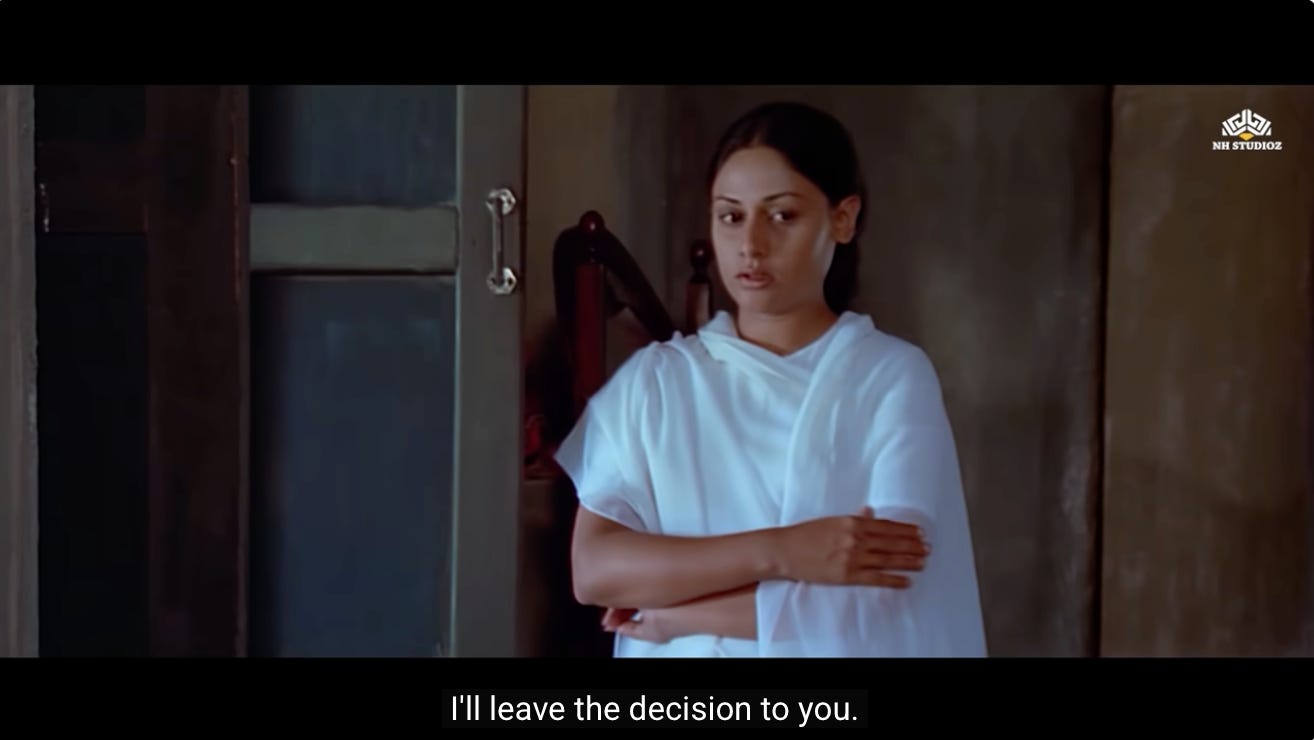
The camera pans to Radha as Thakur says this. Great direction here. Radha is present as a silent observer in this conversation, which indicates that she has accepted Jai’s proposal for marriage. She is hopeful that she will be given a second chance.
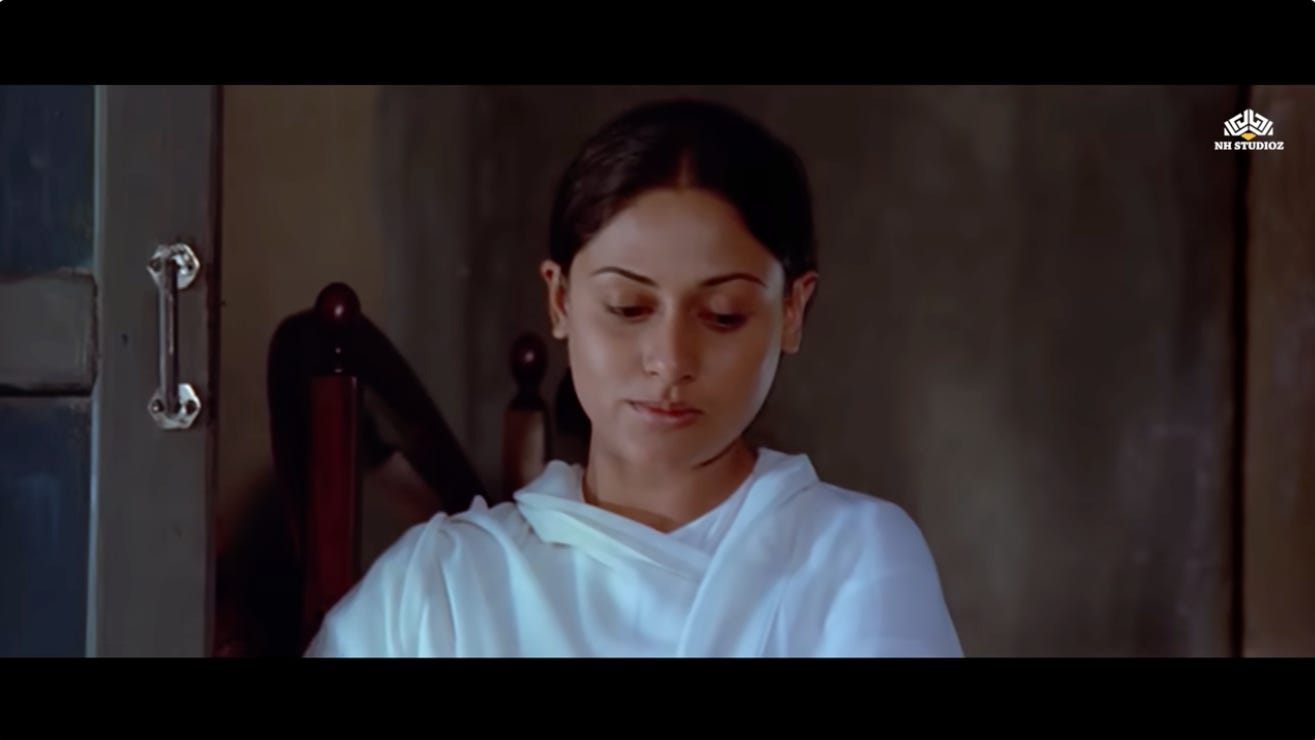
As both elders agree to the marriage, the camera pans back to Radha. She has an expression of quiet relief and prospect for her new life to have some meaning. She is also aware of the monumental change this is for a widow to remarry.
9. Jai and Veeru Look to the Future
In the very next scene, Jai and Veeru are shown making plans to settle down in the village.
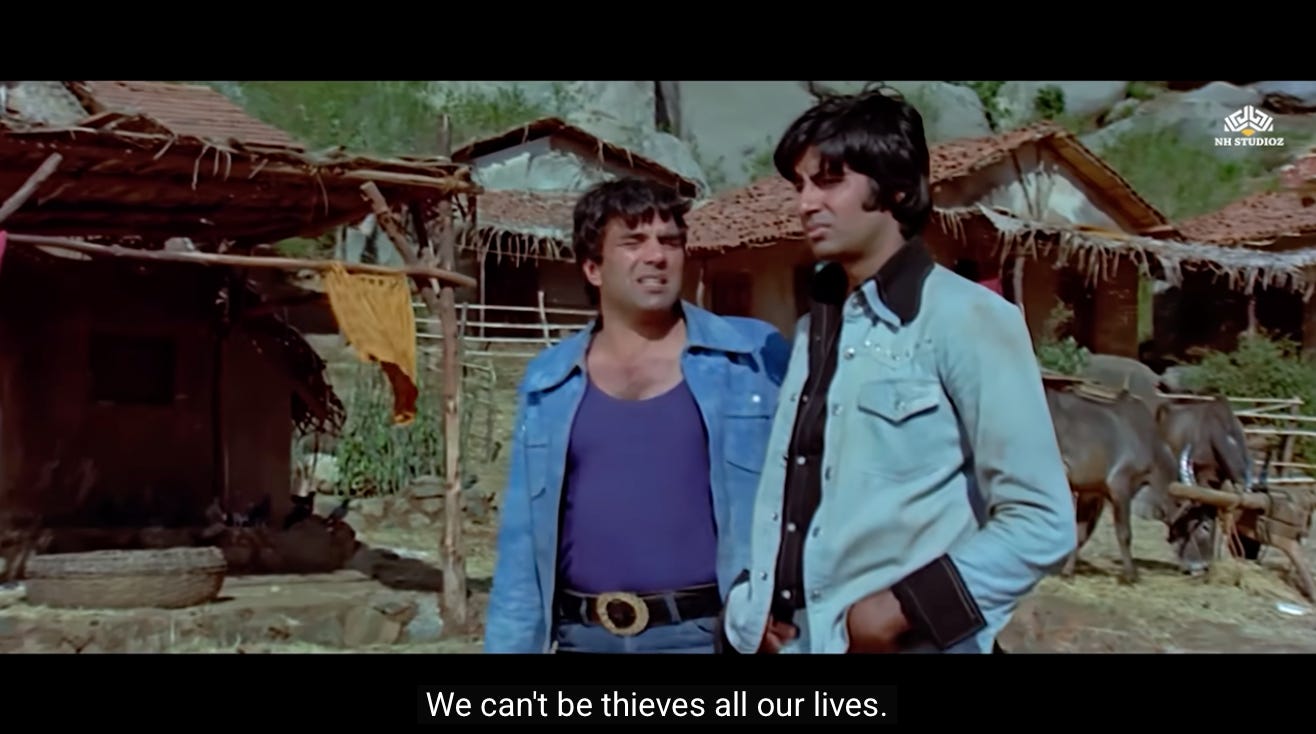
But Veeru wonders how it will work out as they can’t use the plough to till the land. They are not farmers.
This scene talks to the importance of skill building that needs to happen so that people can make use of the second chances they are given.
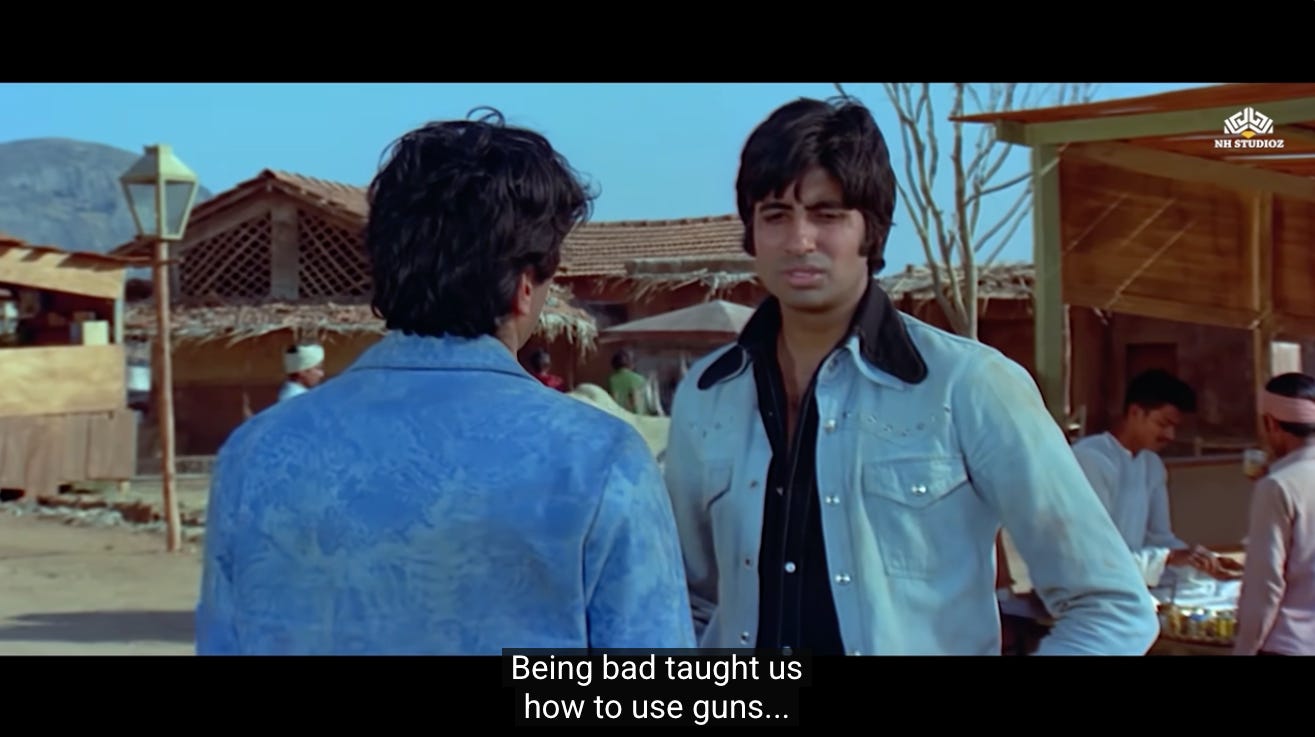
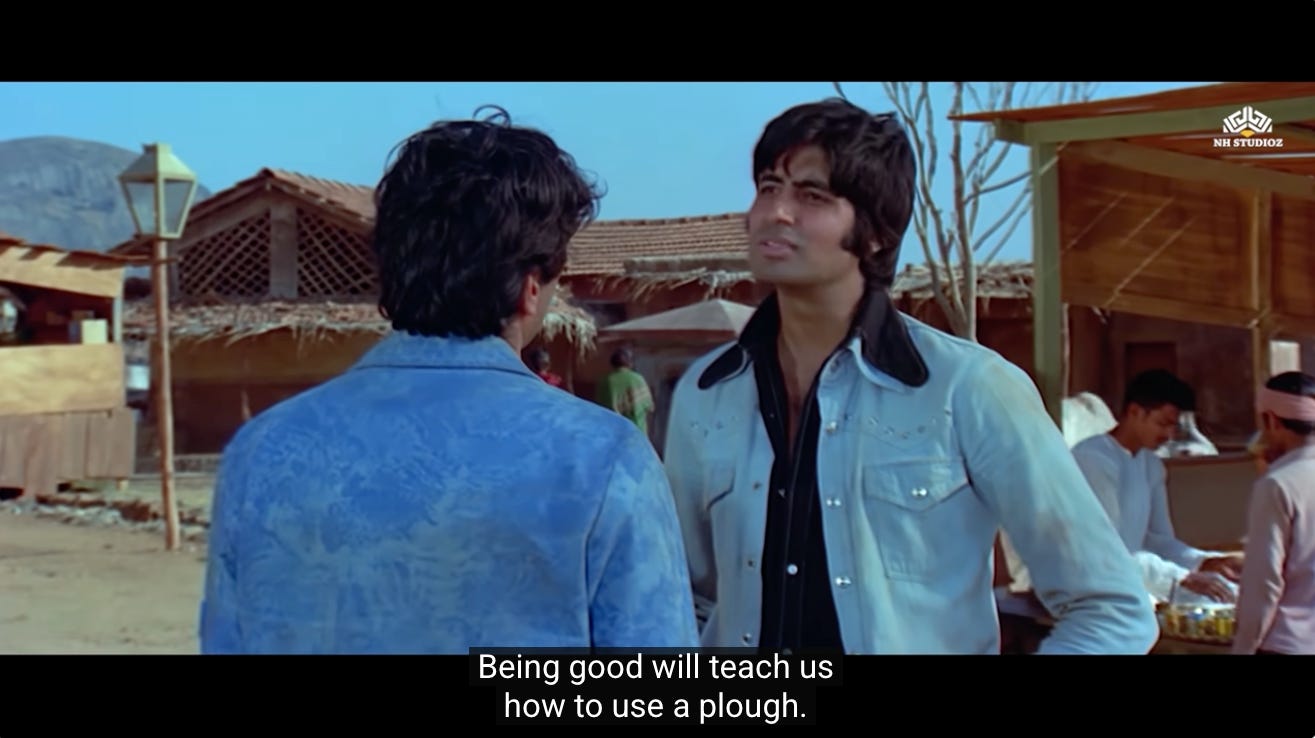
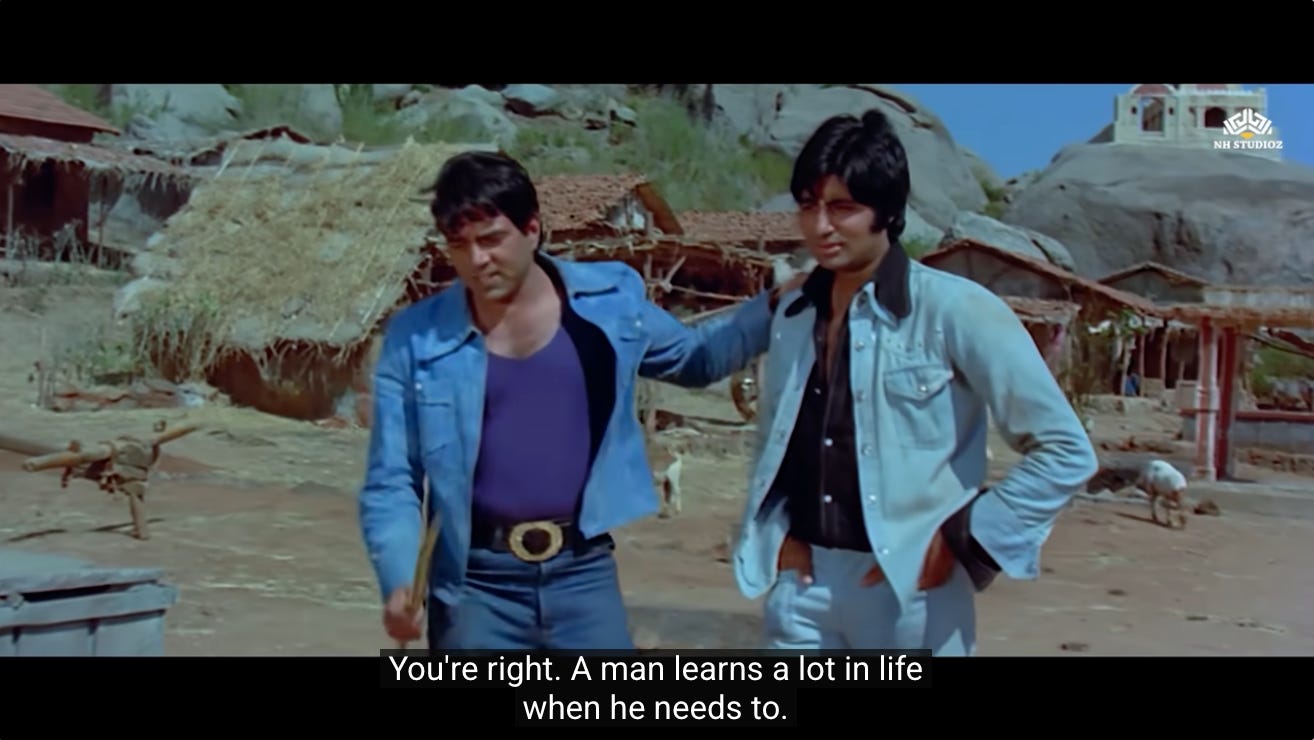
When people have the courage and will to transform themselves, they will do the needful to hold themselves accountable.
10. An Unfinished Story
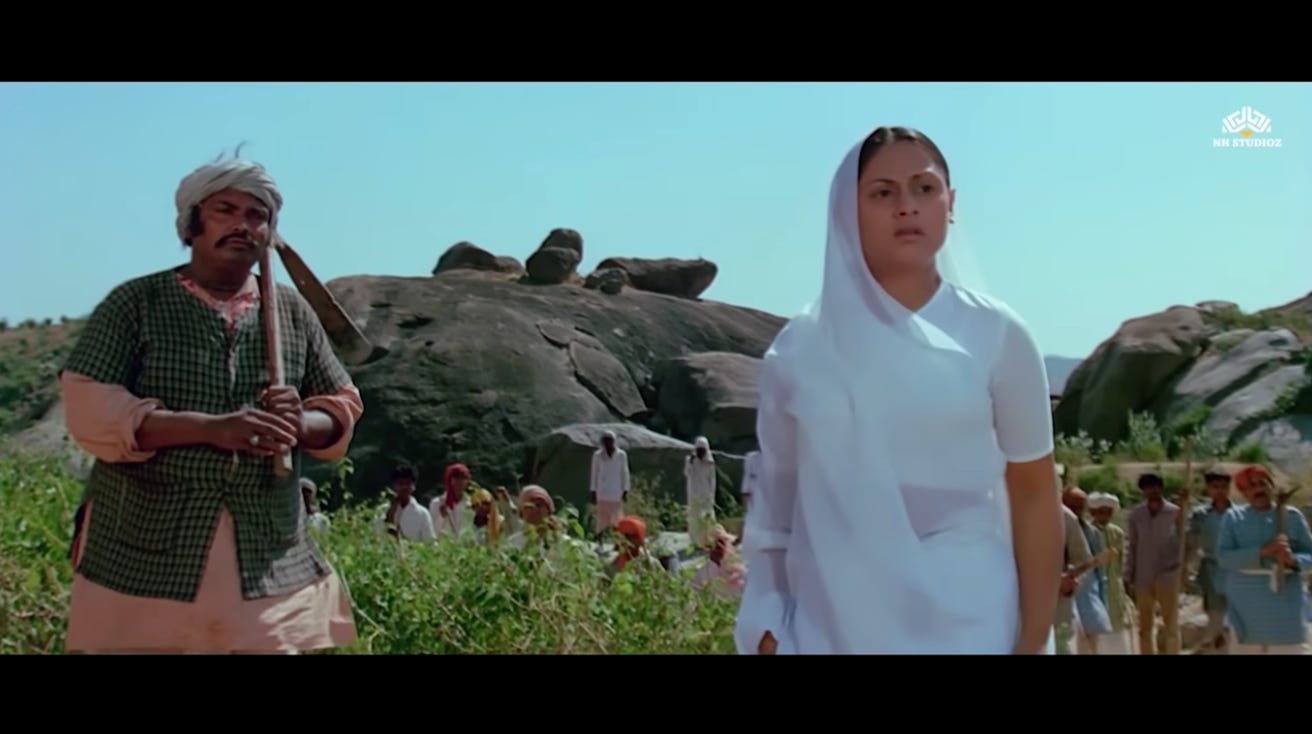
Fast forward to the gunfight with Gabbar’s dacoits where Jai gets fatally wounded. As he is lying in Veeru’s arms, Radha rushes to the scene along with Thakur and villagers, anxiety writ large over her face, worried that her second chance will not materialize.
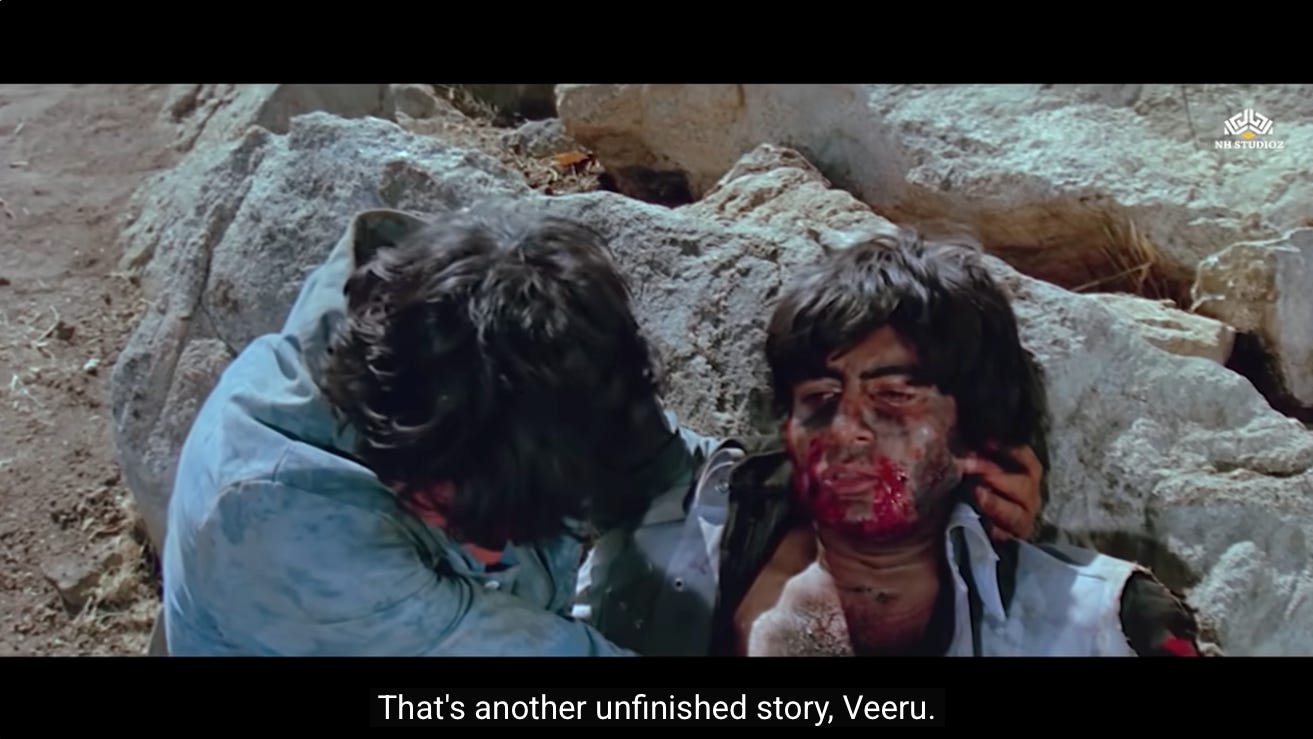
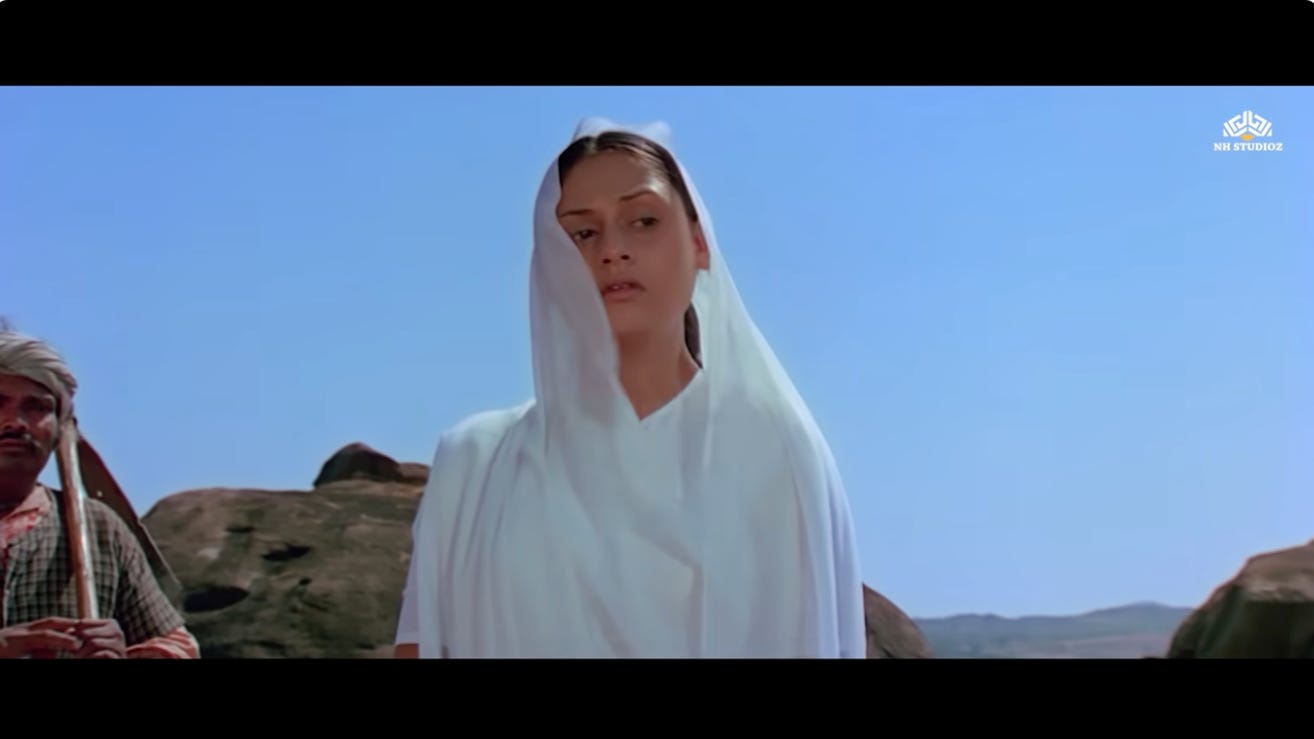
Salim-Javed and Ramesh Sippy were unsure how the audience would accept the concept of widow remarriage. When the film had a tepid opening, they wondered if they should reshoot the ending, keep Jai alive, and unite Radha and Jai.
However, they waited and the rest is history.
The End
As we can see, the central theme that people deserve a second chance, especially those that have been discarded and marginalized by the system and society, runs through the film.
The key questions the film covers that are aligned with the central theme are as follows.
Do people deserve a second chance? They may be at fault, and even criminals like Jai and Veeru, or like Radha, who are suffering for no fault of their own.
If they are given a second chance, can they overcome their default tendencies (being petty thieves like Jai and Veeru) or their disposition that is a result of the suffering that is forced upon them (like Radha)?
In order to give them a second chance, how should we (the society and system) change our way of looking at them? Can we bring it upon ourselves to see the good in them?
It is human to build connections and not isolate people, no matter what may have happened. Giving people a second chance goes against the grain and, in some cases, centuries old traditions (a widow cannot remarry). Can we become a progressive society and break ourselves free from such rules and traditions that hold us back from being human? Or are we going to shy away from doing the right thing for fear of what others will say?
If people are given a second chance to rehabilitate themselves, what new skills do they need so they can take up new roles in society? How can they stand up and be accountable for themselves? How do we enable them to do this?
This is the central conflict between characters who represent the rigid system and those who advocate for second chances.
The question arises whether this central theme was intentionally thought of or are we reading into what might be coincidence. Given how this theme surfaces at many points, it appears to not be random and coincidental.
A significant portion of the film is devoted to the topic and the questions we have raised above. So it feels well-defined, well-constructed and deliberate. The plot of Thakur’s revenge against Gabbar serves as the front for this subliminal message. The elements of stellar star cast, music, songs, and action all add to the film’s commercial appeal.
What do you think?